

What are the various fibers in textile materials? How much do you know about commonly used calculation formulas?
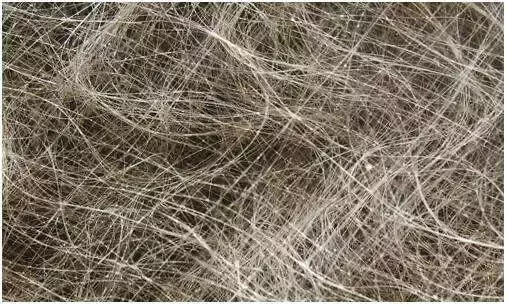
Fiber : Usually refers to a soft and slender body with an aspect ratio of more than 103 times and a thickness ranging from a few microns to hundreds of microns.
Chemical fibers: All fibrous objects made from natural or synthetic polymers and inorganic substances through artificial processing are collectively called chemical fibers.
Differential fiber: usually refers to a fiber that has been physically or chemically modified on the basis of the original fiber composition to achieve a certain degree of improvement in properties.
Composite fiber: a fiber spun from two or more polymers or the same polymer with different properties through a spinneret. .
Superfine fiber: Fibers with a fineness <0. 9dtex are called ultrafine fibers.
High shrinkage fiber: refers to the fiber whose length bends and shrinks regularly or compositely under the action of heat or heat and moisture.
Hygroscopic fiber: refers to a fiber that has the ability to absorb moisture and transport moisture to adjacent fibers.
Functional fiber: a fiber that meets certain special requirements and uses, that is, the fiber has certain physical and chemical properties
Cotton fiber maturity: the degree of thickening of the fiber cell wall.
Fibril is a general term, sometimes it can represent a larger fiber composed of several basic fibrils or several microfibrils, roughly parallel to each other. They are thick macromolecular bundles.
Fiber crystallinity: refers to the ratio of the crystalline part of the fiber to the entire fiber.
Non-product area: The area where fiber macromolecular polymers are irregularly aggregated and arranged is called the non-product area, or amorphous area.
Orientation degree: Whether natural fiber or chemical fiber, the arrangement of its macromolecules will be more or less consistent with the fiber axis. This macromolecular arrangement The degree to which the direction coincides with the fiber axis is called orientation.
Tex (tex): referred to as tex, it represents the mass in grams of a kilometer-long fiber or yarn at a common moisture regain.
Denier is Denier: also known as fineness. It refers to the mass grams of a 9000m long fiber at a public moisture regain rate
Metric count is referred to as count: it refers to the number of meters (m) in length of 1g of fiber or yarn at a public moisture regain rate.
Main length: refers to the length of the most abundant fiber in a batch of cotton samples.
Quality length: refers to the weighted average length of that part of the fiber that is longer than the main length K, also known as the average length of the right half.
Slip K degree: When the staple fiber yarn is broken, the maximum length of fiber pulled out from the cross section of the yarn.
Hygroscopicity: Usually, the ability of fiber materials to absorb moisture from the gaseous environment is called hygroscopicity.
Equilibrium moisture regain: refers to the moisture regain of fiber materials when their moisture absorption and desorption effects reach a balanced steady state under certain atmospheric conditions.
Normal moisture regain: The industry-recognized percentage of moisture content of fiber to dry fiber mass.
Moisture absorption hysteresis: The fiber material has the property that the equilibrium moisture regain rate obtained from moisture release is always higher than the equilibrium moisture regain rate obtained from moisture absorption.
Stress relaxation: Under the condition of constant tensile deformation of the fiber, the phenomenon that the stress gradually decreases with time is called stress relaxation.
Creep: Under the action of a constant tensile external force, the deformation of the fiber gradually increases with the extension of the force time, which is called creep.
Limiting oxygen index: refers to the minimum oxygen volume fraction required for the sample to maintain complete combustion in a mixture of oxygen and nitrogen. LOI=Vo2/(Vo2+VN2)X 100%.
Heat setting: a process in which thermoplastic materials are deformed when the temperature is greater than the glass transition temperature, cooled to maintain shape, and the deformation is stabilized.
Dielectric phenomenon: refers to the phenomenon that the internal molecules of an insulating material (also called a dielectric) form electrical polarization under the action of an external electric field.
Dielectric loss: The energy consumption caused by the heating of the dielectric under the action of the electric field is called dielectric loss.
Static electricity phenomenon: refers to the phenomenon of charge accumulation on fibers or other materials due to contact and friction between different fiber materials or between fibers and other materials. .
Glass transition temperature: the transition temperature of a polymer from a glassy state to a highly elastic state (the temperature at which macromolecular segments “freeze” or “thaw”) .
Open-end spinning: It separates the fibers into individual fibers and condenses them, and twists them into yarn without mechanical holding at one end, so it is called open-end spinning.
Self-twisting yarn: The reciprocating motion of the rubbing roller is used to twist the two strands in the same direction, and the untwisting force of the strands themselves is used to counteract each other. The yarn rolled together to form a double-ply stable structure is called self-twisted yarn (ST).
Air jet spinning: The rotating airflow in the nozzle is used to falsely twist the slivers, and the free fibers at the head end are wrapped around the untwisted short fiber yarn core to form a yarn. Called air-jet spinning.
Metric count: refers to the length in meters of yarn (or fiber) weighing 1 gram when the moisture regain is determined.
Imperial count: refers to the number of 840-yard length multiples of a pound of cotton yarn under the imperial moisture regain, that is, how many inches branch.
Uneven thickness of yarn: refers to the uneven thickness of yarn along the length direction.
Number of twists: Twisting causes the two cross-sections of the yarn to rotate relative to each other. The number of relative rotations between the two planes is called the number of twists.
Twist: The number of twists per unit length of yarn is called twist.
Twist coefficient: When the density δ of the yarn is regarded as equal, the twist coefficient is proportional to the tangent of the twist angle (tanβ), and is proportional to the tangent of the twist angle (tanβ). Line thickness doesn’t matter.
Twist direction: refers to the direction in which the yarn is twisted.
Twist angle: The angle between the surface fiber and the yarn axis after twisting is called the twist angle
Twist shrinkage: The shrinkage of yarn caused by twisting is called twist shrinkage.
Nonwoven fabric: refers to fibers, yarns or filaments that are bonded or combined by mechanical, chemical or physical methods. Sheet or felt-like structures, but excluding woven, knitted, tufted and traditional felt and paper products.
Woven fabric: It is composed of warp yarns arranged parallel to the fabric edge or at a certain angle to the fabric edge and weft yarns arranged perpendicular to the fabric edge. A collection of interwoven sheet yarns.
The arrangement density of yarn: refers to the number of yarns per unit length.
The tightness of the fabric: refers to the percentage of the projected area of the yarn to the area of the fabric, which is essentially the coverage or coverage coefficient of the yarn.
The density of fabric: refers to the mass per unit volume of fabric (g/cm3), which is a basic indicator of the expression of general material quality.
Fabric structural phase: The buckling state of the warp and weft yarns in the fabric is described by the ratio hT 1/hW of the warp buckling wave height and the weft buckling wave height, which is called Fabric structure phase.
The shape retention of fabrics: usually refers to the performance of fabrics that can maintain their original appearance characteristics and are easy to use and maintain during use.
Wrinkleability: The plastic bending deformation of the fabric to form wrinkles when it is rubbed and squeezed is called wrinkleability.
Wrinkle resistance: The ability of a fabric to resist such wrinkles is called wrinkle resistance.
Drapping: The degree and shape of the fabric that sag due to its own weight is called drape.
Shrinkage: The property that the length and width of the fabric shrink after it is not stained in normal temperature water or washed and dried is called shrinkage, or “shrinkage” for short.
Common textile calculation formulas are divided into fixed-length calculation formulas and fixed-weight calculation formulas.
Custom-length calculation formula:
(1), Daniel (D) =g/L*9000, where g is the silk thread Weight (gram) L is the length of the silk thread (meter)
(2), tex (number) tex (H)]: tex=g /L*1000 where g is the weight of yarn (or silk) (grams) L is the length of yarn (or silk) (meters)
(3) , decitex (dtex): dtex=g/L*9000 where g is the weight of the silk thread (grams) L is the length of the silk thread (meters)
Constant weight calculation formula:
(1), metric count (N): N=L/G where G is the weight (gram) of yarn (or silk) and L is the yarn (or silk) Length (meters)
(2), British count (S): S=L (G*840) where G is the weight of the silk thread (pounds) and L is the length of the silk thread (yards)
2. Select the conversion formula:
(1), the conversion formula of metric count (N) and denier (D)= 9000/N
(2), conversion formula of imperial count (S) and denier (D) = 5315/S
(3). The conversion formula between dtex and tex: 1tex=10dtex
(4), special The conversion formula of tex (tex) and denier (D): tex=D/9
(5), tex (tex) and Conversion formula for British count (S): tex=K/S K value: pure cotton yarn K=583.1 purified fiber K=590.5 polyester-cotton yarn K=587.6 cotton viscose yarn (75:25) K=584.8 fiber cotton yarn (50:50 )K=587.0
(6), conversion formula between tex (tex) and metric number (N): tex=1000/N
(7), decitex The conversion formula of dtex and denier (D): dtex=10D/9
(8), dtex and Conversion formula for British count (S): dtex=10K/S K value: Pure cotton yarn K=583.1 Purified fiber K=590.5 Polyester-cotton yarn K=587.6 Cotton viscose yarn (75:25) K=584.8 Wei cotton yarn (S50:50 )K=587.0
(9), conversion formula between decitex (dtex) and metric number (N): dtex=10000/N
(10), metric The conversion formula between centimeter (cm) and inch (inch): 1inch=2.54cm
(11). The conversion formula between metric meter (M) and inch yard (yd): 1 yard=0.9144 meter
(12), the conversion formula of satin square meter weight (g /m2) and millimeter (m/m): 1m/m=4. 3056g/m2
(13), the conversion formula between the actual weight of silk and satin: pound weight (1b) = weight per meter of silk (g/m )*0.9144(m/yd)*50(yd)/453.6(g/ yd)