
How to tell whether the fabric is pure cotton? Cotton is a pure natural fiber that is soft and comfortable, has good moisture absorption and breathability, does not irritate the skin, and does not generate static electricity. It is not only people’s favorite clothing material, but also the inevitable choice for baby clothing, bathroom and bedding. Especially in winter, it is very popular among citizens.
However, because high-quality pure cotton is more expensive than various man-made chemical fibers, some unscrupulous merchants will Low-quality blended or even fully chemical fiber textiles are labeled “100% cotton”. Okay, let’s get to the point, how to deal with “fake cotton”, I’ll teach you a few simple tricks, and the “fake cotton” will be gone immediately.
The first trick: “Tathagata Divine Palm”
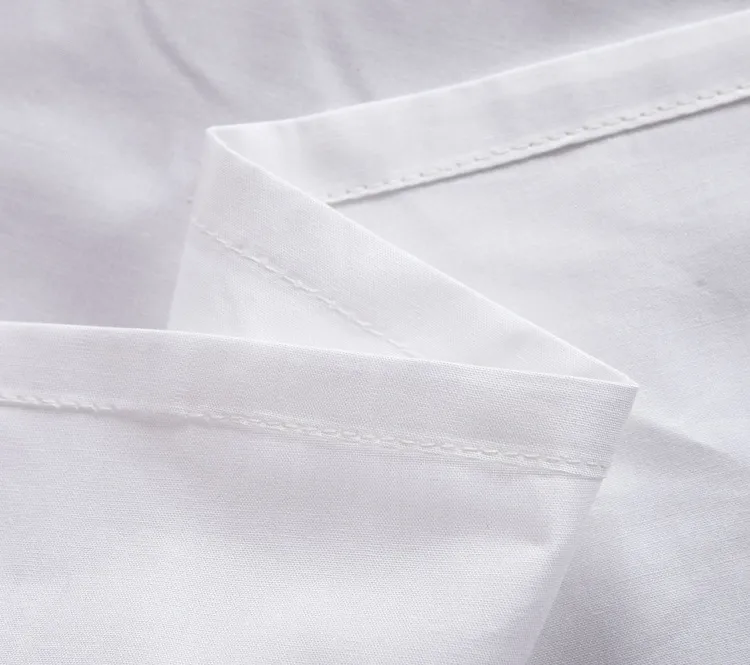
Pure cotton fabric feels naturally soft, plump and thick, with a slightly astringent and sinewy feel, and can be pulled to a small extent , the recovery speed after pulling is slower; while chemical fiber fabrics feel soft and slippery, stretch to a large extent, and will spring back to their original shape as soon as you let go. 2. Rub the edge threads. After rubbing the pure cotton, a lot of thin threads will come out. You can see fibrous substances of different thicknesses. The structure of the chemical fibers is very uniform, and the change in thickness is not obvious. (But be careful, you must choose the thread ends of the fabric on the clothes. The threads used for sewing are often made of cotton and cannot be used as a reference for distinction)
In addition, because cotton yarn is relatively The toughness and elasticity are weak, so the recovery time of pure cotton clothes will be slightly longer after they are wrinkled. Let me teach you the most rustic and most identifiable method: you grab it and hold it in your hand, and then let go. If the wrinkles are very serious, That means it’s made of cotton, or contains a lot of cotton. If there are very few wrinkle marks, it means other ingredients are mixed with it.
You can also fold the fabric in half, and then use your fingernails to scrape along the edges. After unfolding, the more obvious the scratches are, the higher the cotton content is, while pure fiber fabrics will not leave any traces. There are scratches.
The second trick: “Fire Eyes”
Except for mercerized cotton treated with caustic soda, pure cotton fabrics have no obvious luster. The color is natural and soft. When the clothes are put down naturally, the drape will be natural and there will be little “reflection”. When purchasing, you can flatten the clothes and add a certain amount of tension, and then place the fabric at a 45-degree angle to the body and face the light source. If there is bright light, It flashed, then this must be a piece of clothing with a high content of chemical fibers. In addition, due to the addition of fluorescent whitening agents, white clothing made of chemical fiber will be whiter than pure cotton clothing, and may even feel dazzling. Of course, the easiest thing is to look at the washing water label of the clothes! (Of course, this is for brand clothing stores, so don’t read it for ordinary stalls)
The third level: “Dragonfly’s tip”
As we all know, the water absorption of pure cotton is quite good. Dip some water into pure cotton clothes, and then squeeze the water out with your hands. If the water cannot be squeezed out, it proves that it is not pure cotton. , if it is pure cotton, it will show wrinkles after squeezing out water.
The fourth level: “Samadhi True Fire”
From a professional perspective Look, the best way is to use “Samadhi True Fire” to refine it: pull out a small piece of yarn from the seam of the clothing and conduct a fire inspection on it. Real natural cotton fibers will not melt and shrink when burned, but will resemble paper. It will also produce a natural yellow flame, and at the same time produce the smell of burning paper. After burning, it will produce gray-white ash that can be crushed; while chemical fiber will melt and drip when burning, and there will be black smoke and burning glue smell, and the burning will form into black hard spots.
Of course, this inspection method is unsafe and unrealistic for ordinary consumers, so as long as you make good use of your “Tathagata” “God’s Palm” and “Golden Eyes and Fire Eyes”. If you pay more attention to the information and knowledge about pure cotton and textiles, you will be able to sharpen your shrewd eyes and choose truly “100% cotton” clothing.
Pure cotton fabric is favored by people because of its softness, breathability, sweat absorption and other characteristics. Generally speaking, the market sales of natural fiber (cotton, wool, silk, linen) products are often better than those of chemical fiber (polyester, nitrile, nylon, spandex, viscose, etc.) products. In order to make high profits, some manufacturers and distributors manipulate the ingredient content. I can responsibly tell you that sometimes some underwear labeled “100% cotton” actually contain less than 50% cotton. What’s more, some clothing labeled as pure cotton is simply pure fiber. This situation not only exists in street fashion stores, but is also common in some brand stores. At the same time, all clothes nowadays are no longer made of real cotton, and “cotton” is the internationally accepted term!