
Polycotton
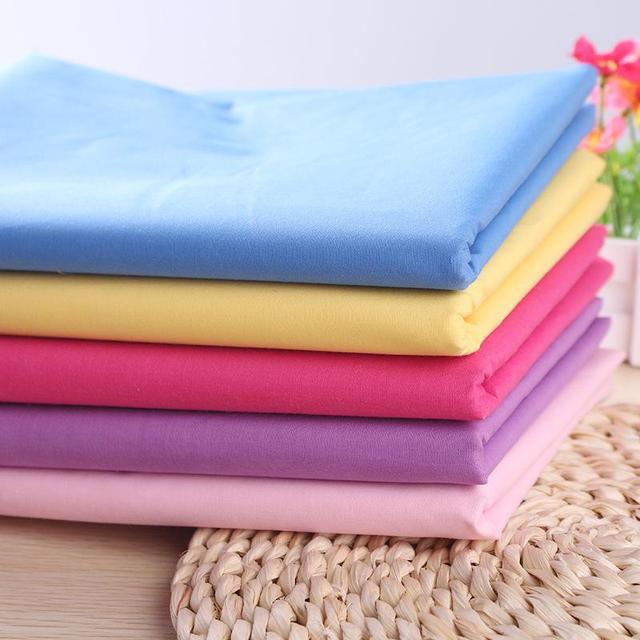
Cotton + polyester refers to the collective name for blended fabrics of polyester and cotton. Generally, there are two classification methods: blending and interweaving. The advantage is that it has good wrinkle resistance and is not easy to deform; the disadvantage is that it is easy to fluff, and the fabric feels hard due to double dyeing. It feels soft and thick, and is not easily deformed after washing, but its wearing comfort is slightly worse than that of pure cotton. The 65% cotton T-shirt fabric is okay, but the 35% cotton T-shirt fabric is worse. It is very uncomfortable to wear and easy to pill. (This type is mostly used in foreign trade products)
100% cotton
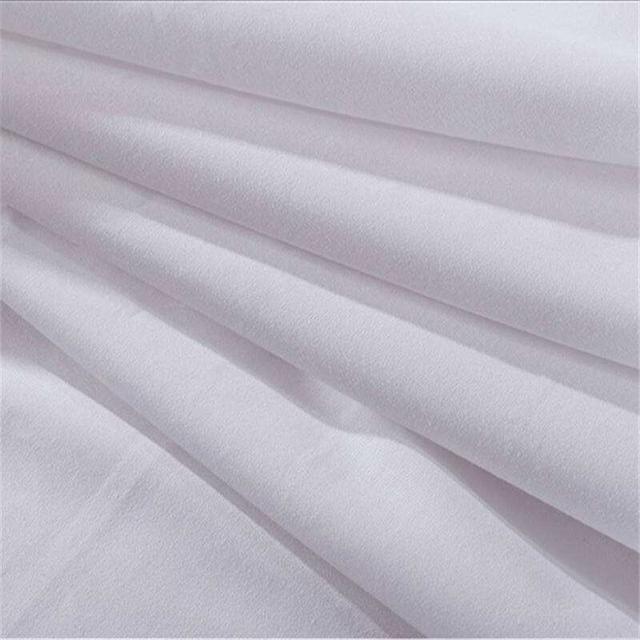
This is more commonly used T-shirt fabric is very cost-effective. Although it is not treated with other high-end T-shirt fabrics through special processes, it is 100% pure cotton and still maintains the superior natural characteristics of pure cotton. It has good skin-friendliness, good breathability, and moisture absorption. Good sex. If you don’t have a big budget and want to be comfortable, this one is a good choice. Of course, some 100% cotton that has been treated with special processes such as hair removal and softening are also high-end fabrics.
Cotton + Lycra (high-quality spandex) is also called Lycra cotton
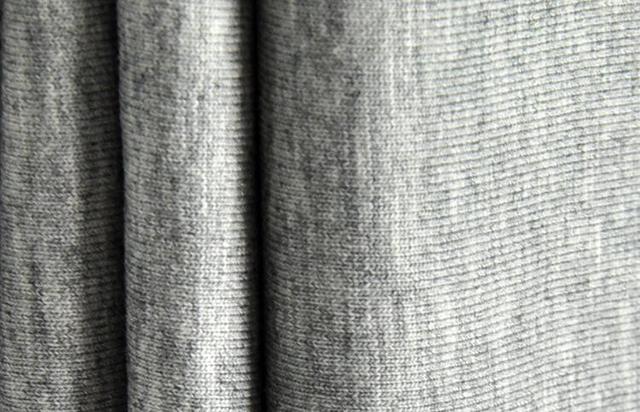
Has drape and foldability Mark recovery ability, which is the elastic cotton fabric embedded with spandex during the weaving process. It feels good, is close to the body, highlights the figure, and is elastic, especially suitable for close-fitting clothing. In the past two years, it has been used on men’s T-shirts. Generally, when making T-shirt fabrics, fabrics with spandex can only be treated with light alkali and low temperature mercerization. This kind of fabric is more suitable for close-fitting fashion-style T-shirts, and the skinny texture will be worse. In particular, it is important to note that this fabric must be treated with anti-shrinkage.
Mercerized cotton
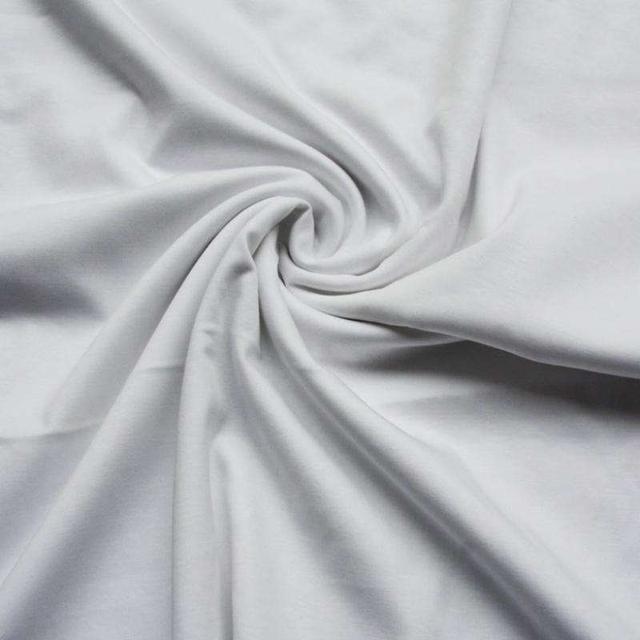
High-woven yarn is made by worsted spinning, and the mercerized cotton fabric is made of cotton as raw materials. After special processing procedures such as singeing and mercerization, it is made into high-quality mercerized yarn that is smooth, bright, soft and wrinkle-resistant. The high-quality T-shirt fabric made of this raw material not only fully retains the excellent natural characteristics of raw cotton, but also has a silky luster. The fabric feels soft, is moisture-absorbent and breathable, and has good elasticity and drape. In addition, it is rich in colors and makes it easy to wear. Comfortable and casual, it fully reflects the wearer’s temperament and taste. Mercerized cotton and double mercerized cotton fabrics are delicate and different from ordinary clothing in terms of workmanship, printing and embroidery. It is recommended to look for manufacturers that specialize in high-end T-shirts, as they are more experienced.
Double mercerized cotton
Using mercerized yarn that has been singed and mercerized as raw materials, pure cotton double mercerized fabric is a pure cotton product of “double burned double yarn”. The CAD computer-aided design system and the CAM computer-aided production system are used to quickly weave the designed pattern T-shirt fabric. After the gray fabric is singed and mercerized again, and a series of finishing operations are performed, this high-end T-shirt fabric is produced. The cloth has clear texture, novel patterns, bright luster, and smooth hand feel. It is better than mercerized cotton, but because it needs to be mercerized twice, the price is slightly more expensive.
Pure cotton fabric
1. Characteristics: It is a hydrophilic fiber, has strong water absorption and is quick-drying. It is a medium-strength fiber with a tensile strength of 3.5 ~ 4.0g/d, but its strength increases by 10% when wet, making it a washable fiber. It has good thermal conductivity and no static electricity problem.
2. Advantages: a) It absorbs sweat and dissipates heat, and has a low unit price; b) It conducts heat and electricity well, and does not cause problems with static electricity; c) It is afraid of acids but not alkali and can withstand cleaning with strong detergents.
3. Disadvantages: a) The stretch elasticity is poor and easy to wrinkle; b) There will be shrinkage when exposed to water in the initial stage. After washing, the whole garment will be wrinkled and the size will shrink or become larger. ; c) Susceptible to mildew and moth damage; d) Sweat acid will damage cotton, reducing its strength and prone to yellowing.
CVC
1. Characteristics: 70% cotton and 30% man-made fiber blended.
2. Advantages: It has the sweat-absorbing effect of cotton and the appearance of man-made fibers.
3. Disadvantages: poor touch.
TC (TC Tetolon, stretch nylon)
1. Material: polyester fiber POLYESTER.
2. Advantages: good texture and resistance to sunlight, not easy to deform when washed in water, and good friction resistance.
3. Disadvantages: It will produce static electricity and pilling, and does not absorb sweat.
Nylon (Nylon)
1. Characteristics: excellent durability, high strength and high friction resistance.
2. Advantages: Smooth surface, high gloss and softness. It has excellent resistance to alkali and chlorine-containing bleach, but strong acid will damage nylon. Easy to wash, quick to dry, and not easy to wrinkle. Not afraid of moths and mildew.
3. Disadvantages: Does not absorb water and is prone to static electricity. Very poor resistance to sunlight.
Lycra
That is, nylon and spandex. Lycra, to put it bluntly, is just rubber bands added to the fabric to make the fabric elastic. Many cotton fabrics have 5% to 10% Lycra, which is spandex, added to them. This kind of fabric has a certain degree of elasticity, so the clothes can be tailored to fit more closely, but they are not restrictive and are more comfortable to wear. �Flexible fibers are not cloth, they are the components that make up cloth.