
Introduction: Even if you admit that “skirt length is realistic”, you can’t The admitted ideal is still in the long term: with the economic prosperity of the millennium, the length of skirts cannot be shorter, so why don’t you just stop wearing bottoms?
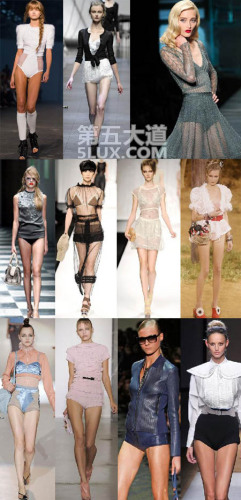 2010 Spring and Summer Fashion Week throw away your bottoms
Looking at the usual popularity of the broad shoulders of the 80s , so I pulled out those old-fashioned clothes from the closet and put them on to play retro. One day skinny jeans are popular, the next day I find tight leggings to replace my pants, and the day after tomorrow I don’t wear them anymore. More than a hundred years ago, women gradually gave up on complicated bustles and heavy petticoats. As the economy developed and science and technology advanced, women also continued to strive for more freedom. To restrain themselves, they first had to restrain their legs and waist, so This leads to this century-old evolution history of skirt length that has made people laugh or cry until now, or it can also be called the evolution history of pantsless suits.
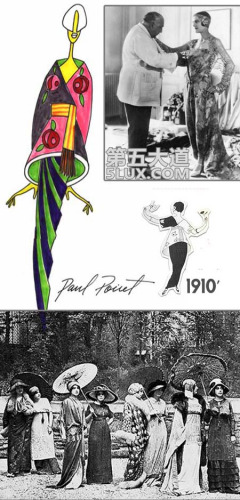 The popularity of Paulette’s ankle-length skirts and court robes
1910’s: Ankle-length skirts (ballet skirts)
Keywords: Edwardian style, the popularity of Paulette ankle-length skirts and court robes, there is no so-called “less is more” rule
During the reign of Edward III in England from 1901 to 1910, The Edwardian style was a luxurious style that was popular at the time, consisting of an hourglass shape, a corset and a lily-shaped skirt. In addition, the French design master Paul Poiret (Paul Poiret), a generation of “ruler of the fashion world”, tends to design skirts with smooth lines. He is inspired by the style of the French cabinet period and Western style, and also covers the designer’s own life. Gorgeous style of work environment.
In 1912, a very extreme skirt was designed, with a narrow hem, an ankle-length skirt, and a diagonal slit with wider hips. The wearer could not even sell a three-inch skirt. That is, the extremely popular “staggering skirt”. Paulette advocated Western aesthetics and changed the restrained lines that were exaggerated in the 19th century. The details of the gorgeous Russian palace, the Persian-style clothes and the loose and comfortable long skirts were deeply loved by the aristocrats and fashionable men of the time.
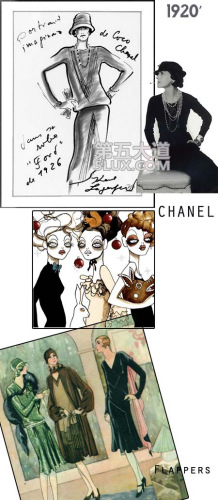 Neutral trend is presented
1920’s: midi skirt
Keywords: Unisex trend is presented, Flappers’ loose low-waisted short dress , Coco-Chanel (suit, “less is more”, little black dress)
After World War I, women’s clothing underwent revolutionary changes, and feminist activities were one of the main influencing factors. The emergence of a new group of increasingly professional women has prompted the emergence of professional attire. People no longer need tight clothing that distorts the body and begin to reject designs that emphasize female features. Instead, they need more leg freedom. The result was complex, loose-fitting shift dresses and shift skirts. Chanel suits with complex designs also emerged, and the classic little black dress also began. Compared with the day wear, the evening wear part was influenced by the appearance of Flappers (young men with short hair, short skirts, makeup, and who often appeared in jazz parties) in the “quiet 20’s”, decorated with pearls, sequins, and tassels. The loose, low-waisted one-piece short skirt became popular for a time.
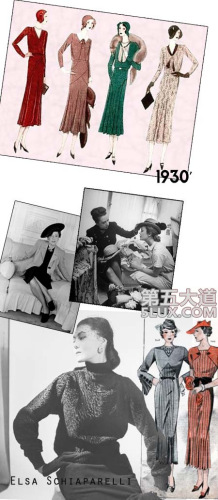 Elsa Schiaparelli’s innovation
1930’s: to the tibia skirt (length to mid-calf skirt length)
Keywords: Slender figure, Elsa Schiaparelli’s innovation
With the detailed segmentation of women’s wardrobes to accommodate different Depending on the occasion, such as in the city or the countryside, cocktail receptions or informal parties, sports activities, etc., women’s skirts during this period often used drapey fabrics, calf-length, normal waistlines, narrowed hips, and expanded hems. Through the ingenious use of bias cutting, hanging, and wrapping around general lines, the waistline returns to its original position. Although the economy was prosperous, the 1930s was a time when everyone was eager for innovation. The design comparable to Chanel in the 1920s was undoubtedly the design of the Italian designer Elsa Schiaparelli. She always conquered everyone by imitating others. In the 1930s, she In the early days, the focus of fashion was moved from the waist and hips to the shoulders. The widened shoulder pads visually narrowed the waist and abdomen lines. This kind of women’s clothing inspired by the London Guards uniforms was also featured in fashion magazines at the time. Named Schiaparelli’s “imaginative invention”.