
The article is excerpted from “Cultivating Charming Women”
Author: Zhang Xiaomei CITIC Publishing House
Introduction to the book: Charm is a woman’s analytical index, which naturally surges, erupts, and is revealed from the outside of a woman’s body and from the depths of her heart. A kind of charm comes out. Charming women will grow old healthily and gracefully. In fact, her heart never grows old, and even becomes more and more charming. Women who want to be full of charm, I reveal…[Serial mode]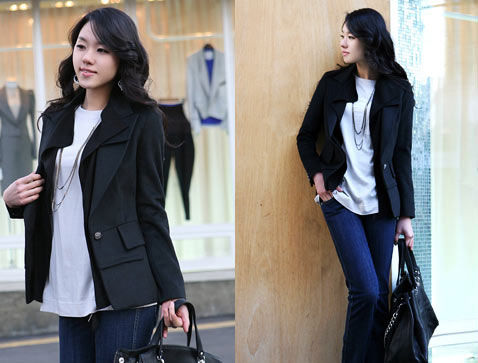 Poor management of the wardrobe: matching to create a fashionable and sexy woman (Sina Reading with pictures)
Some women can make waves in their careers and lead huge companies; some women can keep their family life in order and make their children and teachers happy. But they just can’t manage their own wardrobe. They complained: “My wardrobe is almost overflowing with clothes, but I still don’t know what to wear every time I go to a dinner?” Others have this confusion: “I almost have to buy clothes every month, but how can I buy clothes?” I still can’t match my coat when I get home, so I have to look for new clothes from time to time.”
Does the wardrobe need management? The answer is yes. Managing a wardrobe is just like managing a business or a home. It’s not just about having a tidy wardrobe or choosing clothes conveniently. Wardrobe management can make your clothes “great value for money”, save you more time and money, and bring you a happy mood. It can also exercise your management, judgment and analysis skills, making your life more disciplined and orderly.
Wardrobe management can be roughly divided into three parts: First, wardrobe analysis. This requires analyzing one’s own life, work, social life, etc., and then calculating the approximate proportion of various types of clothing required. I mentioned later that clothing can be divided into business attire, business attire for going out, evening dress, official dress, casual wear, as well as home wear, activity wear, etc. Because everyone’s life and career situation are different, the proportion of types of clothing required is also different.
Take myself as an example. I work in fashion media and have some social duties. Daily office work and social activities account for almost 50% each. Therefore, professional attire and official formal attire account for a large proportion of my clothing, about 50% or more. Although the style of this kind of clothing is simple, the quality requirements are high. Since you often need to be interviewed by TV newspapers and media, you need to consider which clothes are suitable for appearing on the scene without being repeated. A ratio of about 15 to 20% is required, and a high turnover rate is required. In addition, in order to attend various evening parties and banquets appropriately, a certain proportion of evening wear is necessary, accounting for about 10 to 15%. This type of clothing has high requirements for personalization and decoration. It must strive to have a unique temperament and style among a large number of people. In addition to the main body of clothing, special attention must be paid to the combination and matching of accessories. I like activities and travel, so I also need sportswear and casual wear suitable for traveling. This type of clothing accounts for about 10 to 15%. Also, I love comfortable loungewear, and the first thing I do after work is change into bulky, mild loungewear. Home clothes should be comfortable and comfortable. They don’t need to be too elaborate or too large. Just 2 to 3% is enough. When analyzing the proportion of clothing, it is also necessary to consider some other factors, such as the means of transportation used, social status, cultivation, taste, etc. This flexible proportion is 7%.
The second part of wardrobe management is to formulate a wardrobe management plan. If you want to successfully establish an order in your wardrobe, you need to have a plan and follow it step by step. A good plan includes: What do you want to do? Why? What detailed measures are there? For example, if you want to make your wardrobe more suitable for your living environment, you can plan like this:
What I want to do: Make your wardrobe more suitable for your living environment
What Time starts: a certain year and a certain month
What I want to do:
Inspect the wardrobe in stages (time required: about 1 hour)
Review the wardrobe All items inside are inspected and analyzed.
The second stage is to rebuild the wardrobe (time required: about 2 hours)
Reorganize the current wardrobe.
The third stage of wardrobe optimization (time required: about 20 minutes each time, you can do it flexibly in your spare time)
Match and try on the rearranged wardrobe , and constantly supplement and adjust it to make it more reasonable and match it with new ideas.
Inspection supervisor: XX
The third part of wardrobe management is to implement the wardrobe management plan. Start taking action step by step according to the plan listed.
Step: Prepare the required items: 4 large boxes labeled with “keep”, “send away”, “throw away” and “transition” respectively; small notepad; pen; alarm clock or timer; hanger.
The second step: Based on the wardrobe analysis, review the existing clothes in the wardrobe to see if they fit the current living environment. If they do not fit, adjustments need to be made, which will be far away. Clothes that exceed the required clothing proportions are eliminated. At the beginning, you can�Make a list for myself. Explain on the list the types of clothing that need to be eliminated and the types of clothing that are missing. For example, if more than 20% of casual wear is exceeded, how much needs to be eliminated; when there is still 10% of professional wear for going out, how many trousers and skirts need to be purchased? Including what style, what color, what fabric, etc. Write it down.
The third step: Take out the clothes partially, and then select them one by one, put back the ones you like and suitable, and then list the clothes that need to be eliminated or those in different sizes that are not suitable for your age. , color, style, too old, damaged or stained clothes that are difficult to recover, remove all clothes and put them in corresponding boxes for temporary storage. Generally speaking, clothes that have not been worn for more than 2 years cannot be worn again. So, after two years, you “reluctantly part with” the clothes in the transition box.
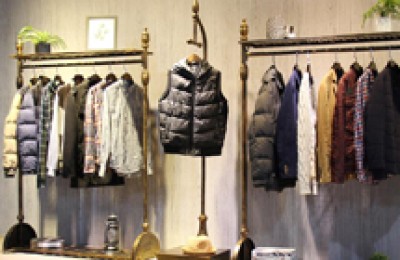
Step 4: Store and hang the clothes reasonably. At this time, you can refer to the way clothes are arranged in clothing stores and classify them by season, style, and color. Keep your wardrobe organized and easy to match when dressing.
Step 5: Match and try on the clothes. This is a temporary task and does not need to be carried out regularly. After each match, you should make a record, either with a pen or a digital camera, just like the clothing matching pictures taken by many fashion magazines. You also need to combine various accessories, and you should be like a model, Try it on fully and observe the effect in the mirror. Don’t put out a whole bunch of clothes for each outfit, just pick one piece at a time and then work around it for various combinations. This won’t take too much effort. During the matching and trying-on process, if you find that there are clothes or accessories that need to be supplemented, you should immediately write them down on the list and bring them with you when shopping, so that you will not be annoyed by buying something that cannot be matched.
Wardrobe management is still a novel topic for most Chinese women, but now it is a life management skill and art that is increasingly worth learning and practicing. Don’t be afraid of trouble, everything is difficult to sort out. As long as you start taking action, wardrobe management will become more and more important and orderly.
This article is copyrighted by Guerlain Business Wear. Please indicate the source when reprinting. Thank you for your cooperation!
Tag: