
Hello! Friends, meet you again, updated every day. When we make clothing, we will encounter a variety of clothing fabrics. In addition to the familiar natural fabrics, there are many fabrics with different characteristics. How to distinguish each one? What are the characteristics of the fabric? Let me tell you about it today.
Fabric styling features:
1. Soft fabrics
Soft fabrics are generally thinner, have good drape, smooth shape lines, and natural clothing contours stretch. Soft fabrics mainly include knitted fabrics and silk fabrics with loose fabric structures, as well as soft and thin linen fabrics. Soft knitted fabrics often use linear and concise shapes in clothing design to reflect the graceful curves of the human body; silk, linen and other fabrics often use loose and pleated shapes to express the flow of fabric lines.
2. Very cool fabric
The crisp fabric has clear lines and a sense of volume, which can form a plump clothing outline. Commonly used fabrics include cotton, polyester-cotton, corduroy, linen, and various medium-thick wool and chemical fiber fabrics. This type of fabric can be used in designs that highlight the accuracy of clothing shapes, such as suits and suits.
3. Glossy fabric
Glossy fabric has a smooth surface and can reflect light, giving it a shiny feel. Such fabrics include fabrics with a satin weave structure. It is most commonly used in evening wear or stage performance clothing, producing a gorgeous and dazzling strong visual effect. Glossy fabrics have a wide degree of freedom in styling during dress performances, and can have simple designs or more exaggerated styling methods.
4. Thick and heavy-duty fabric
Thick and heavy-duty fabrics are thick and stiff and can produce stable styling effects, including all kinds of thick woolen and quilted fabrics. The fabric has a sense of physical expansion and should not be pleated and piled too much. A-type and H-type shapes are the most appropriate in the design.
5. Transparent fabric
Transparent fabric is light and transparent, with an elegant and mysterious artistic effect. Including cotton, silk, chemical fiber fabrics, etc., such as georgette, satin silk, chemical fiber lace, etc. In order to express the transparency of the fabric, H-shaped and circular cone-shaped designs with natural and full lines are commonly used.
Commonly used fabrics for clothing:
1. Pure cotton
Natural fabric, comfortable to wear, breathable, warm, But it wrinkles easily, is difficult to take care of, has poor durability, and fades easily. Therefore, there are very few 100% cotton fabrics. Usually, the fabrics containing more than 95% cotton are called pure cotton.
Advantages: strong hygroscopicity, good dyeing performance, soft touch, comfortable to wear, no static electricity, good breathability, anti- Sensitive, simple in appearance, not easy to be infested by insects, durable and easy to clean.
Disadvantages: large shrinkage, poor elasticity, easy to wrinkle, poor shape retention of clothing, easy to mildew, slight Fading phenomenon, not acid-resistant
Note: Clothing and cotton should be moisture-proof and mildew-proof during storage, use and storage; they should not be used for long periods of time Time exposure, the inner layer needs to be turned out when drying, do not wring it out, prevent moisture, mildew, and dry in the shade. It can be machine washed or hand washed, but due to the poor elasticity of the fiber, it is best to wash it or not wash it by hand vigorously during washing to avoid deformation of the clothes and affecting the size. It is best to wash cotton fabrics in cold water to maintain the original color. Do not soak them for a long time. Key points for ironing: iron at low and medium temperatures; when ironing at medium temperatures, the clothes must be covered with a dry cloth to avoid aurora. Ironing should be done at low or medium temperature; when ironing at medium temperature, the clothes should be covered with a dry cloth to avoid aurora.
2. Cotton mercerization
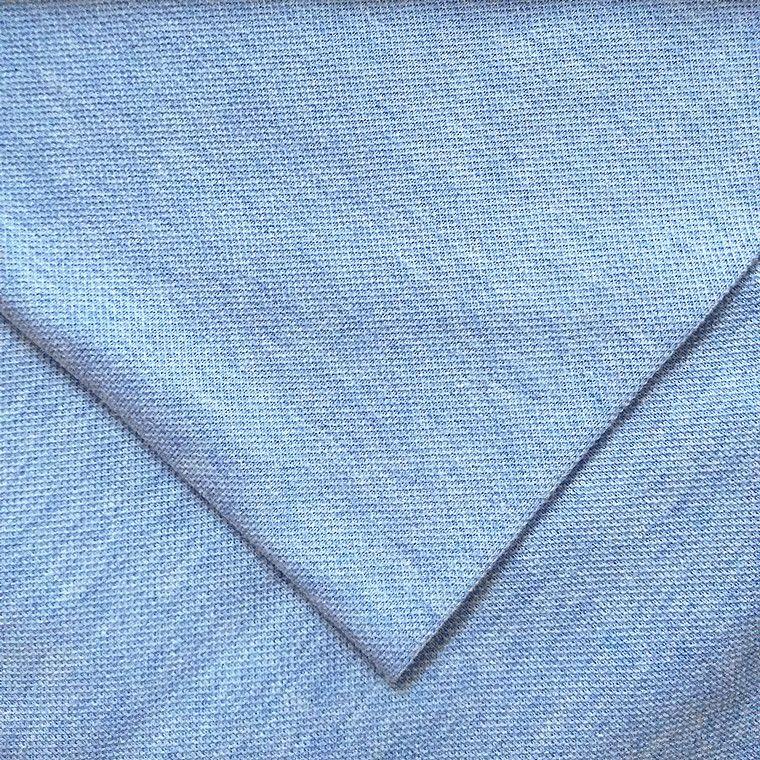
Advantages: After the cotton fabric is treated with high-concentration caustic soda (wool), it feels smooth, has bright colors, silky luster, and is comfortable to wear.
Disadvantages: Slight fading.
Notes: (Basically the same as cotton fabric).
3. T/C fabric (polyester/cotton)
Fabric technology: using fine or ultra-fine denier polyester fiber and high-count combed cotton (40-count, 60-count, 80-count, etc.) Interwoven,
Advantages: The fabric feels crisp, smooth and bright in color. The body is elastic, has good moisture absorption and breathability, has a smooth surface, and has a certain rainproof function.
Washing and maintenance: Washing temperature should be above 30℃.�. The washing and soaking time should not exceed 30 minutes. Do not bleach with chlorine, do not expose to the sun, do not wring out, do not tumble dry, suitable for drying in the shade, and pay attention to moisture. Ironing. Do not dry clean. Iron at 110℃ low temperature steam.
4. Hemp:
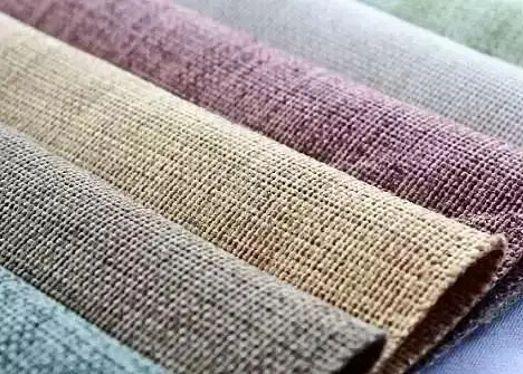
It is a kind of plant fiber, known as a cool and noble fiber, and it has good hygroscopicity , it also releases moisture quickly, is not easy to produce static electricity, has large heat conduction, quickly dissipates heat, is cool to wear, does not stick to the body after sweating, is more resistant to washing, and has good heat resistance.
5. Mulberry silk:
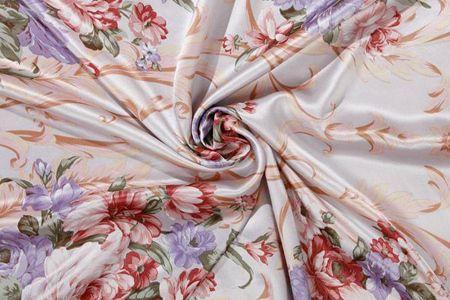
Natural animal Protein fiber, smooth, soft, shiny, warm in winter and cool in summer, has a unique “silky sound” phenomenon when rubbed, has good extensibility, good heat resistance, is not resistant to salt water corrosion, and should not be used Treat with chlorine bleach or detergent.
6. Viscose:
Made of natural materials such as wood, cotton linters, reeds, etc. Cellulose material is processed from chemical materials. It is also often called artificial cotton. It has the basic properties of natural fiber, good dyeing performance, good fastness, soft fabric, heavy specific gravity, good drape, good hygroscopicity, cool to wear, and not easy to generate static electricity. , fluffing and pilling.
7. Acetate fiber:
It is chemically processed from natural materials containing cellulose. It has a silk style, is light and comfortable to wear, and has good wear resistance. Elasticity and elastic recovery properties, not suitable for washing, poor color fastness.
8. Polyester:
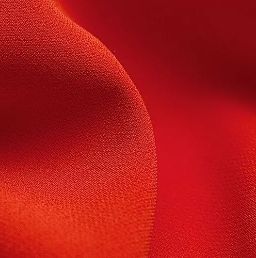
Belongs to polyester fiber and has excellent elasticity and recovery. , the fabric is crisp, wrinkle-free, has good shape retention, high strength, good elasticity, is durable and has excellent light resistance, but it is prone to static electricity and has poor dust absorption and hygroscopicity.
9. Nylon:
It is polyamide fiber, also known as nylon. Its dyeability is better than synthetic fiber. It is light to wear and has good waterproofing. Windproof performance, high wear resistance, strength and elasticity are very good.
10. Polypropylene:
Appearance is like woolen silk or cotton, with waxy feel and luster, elasticity and recovery properties, generally not easy to wrinkle, small specific gravity, light weight, comfortable clothing It has good resistance, can transfer sweat faster to keep the skin comfortable, has good strength and wear resistance, is durable, and is not resistant to high temperatures.
11. Spandex:
It has excellent elasticity and is also called elastic fiber. Called Lycra, it has good elasticity, smooth hand feel, low hygroscopicity, good weather resistance and chemical resistance, machine washable, and poor heat resistance.
12. Cashmere:
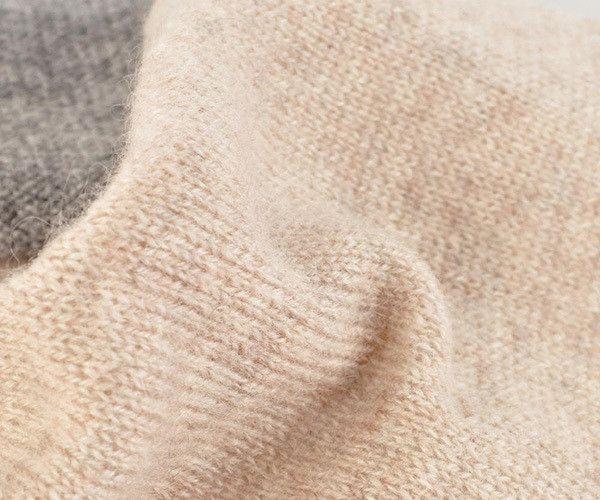
It is light in texture and very warm. It is a unique and rare animal fiber. It is known as “fiber diamond” and “soft gold” abroad. It has the characteristics of soft, slender, smooth, thin, elastic and other characteristics. Natural and soft color, good hygroscopicity and wear resistance.
13. Rabbit fur:
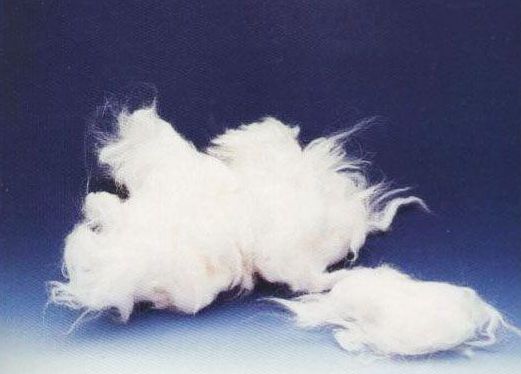
Small specific gravity, good warmth retention, elasticity, and moisture absorption It has the characteristics of strong sex, softness, warmth, and beauty. It has poor cohesion, low strength, and is prone to hair loss.
14. Mohair:
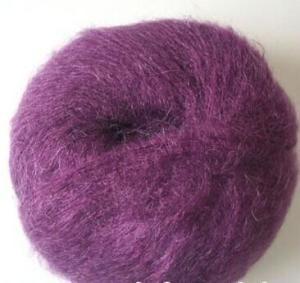
High strength, high elastic recovery rate, strong wrinkle resistance, It has good wear resistance and hygroscopicity, strong anti-fouling properties, good dyeability, does not shrink and is not easy to feel.
15. Camel Plush:
is an ideal thermal insulation material. It has the advantages of light weight, easy to wash, good warmth retention, and cheaper than down. It has weak luster, smooth feel, good elasticity and strength, good warmth retention and good wear resistance.