
Plain crepe satin
It feels soft and waxy, and is more shiny than other silks. However, if you don’t wash it well, the luster will become darker after a few times. It has no stretch and belongs to 100% mulberry silk. As shown in the picture:
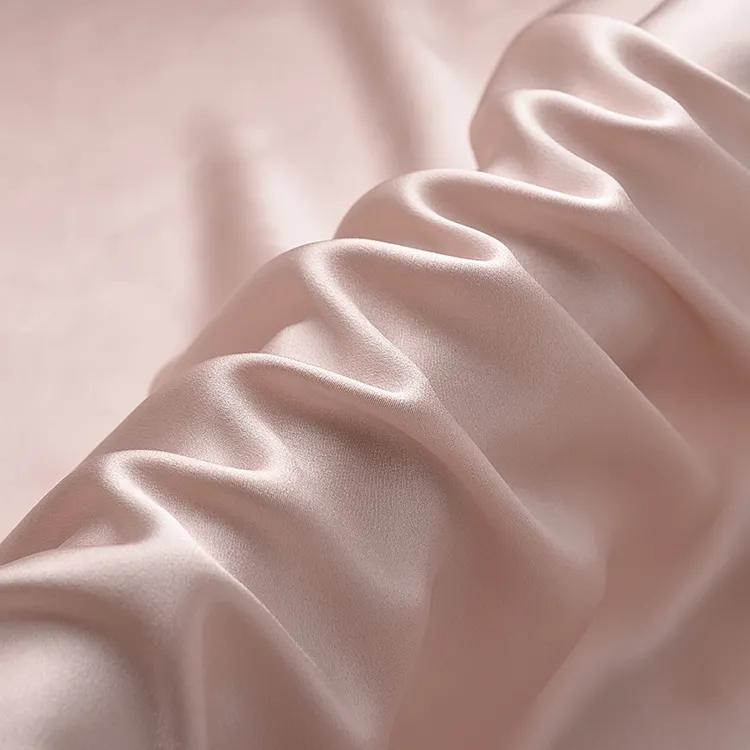
Plain crepe satin is suitable for making dresses, scarves, shirts, etc. The weave is tight and the texture is difficult to see with the naked eye. The disadvantages are that it is easy to snag, wrinkle, and has a large shrinkage rate. The heavyweight plain crepe satin has a soft luster, feels thick and crisp, and is not easy to deform, snag, or wrinkle. Well, there is nothing wrong with it except that it is expensive
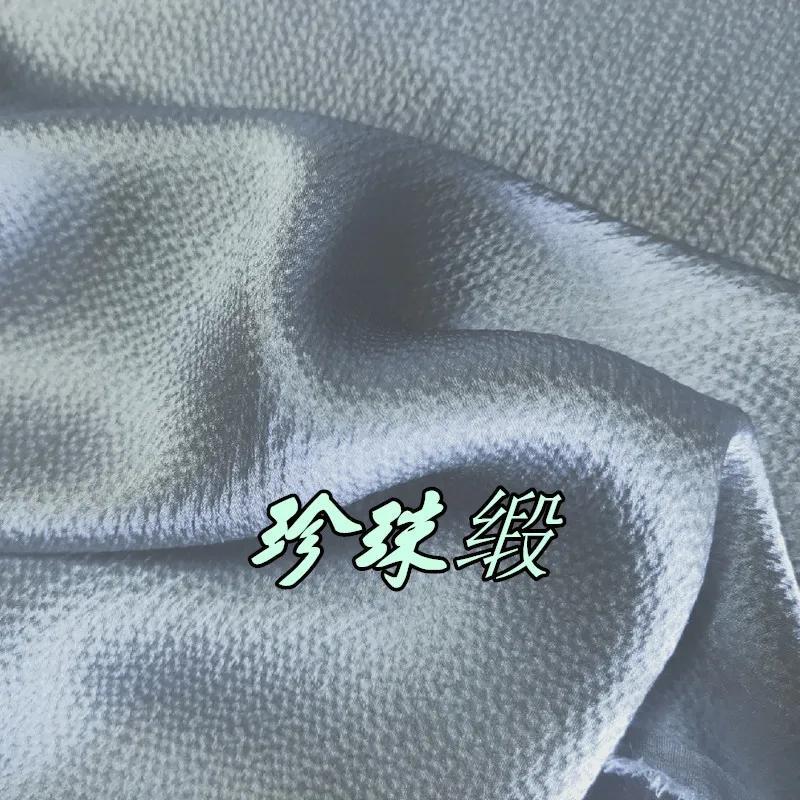
Pearl satin: It has a pearl luster, and the wrinkles on the surface are more obvious. . The luster is fat and bright, similar to plain crepe satin, but the front and back are different, with a slight bumpy feel, soft and comfortable, suitable for shirts, dresses, etc.
As shown in the picture:
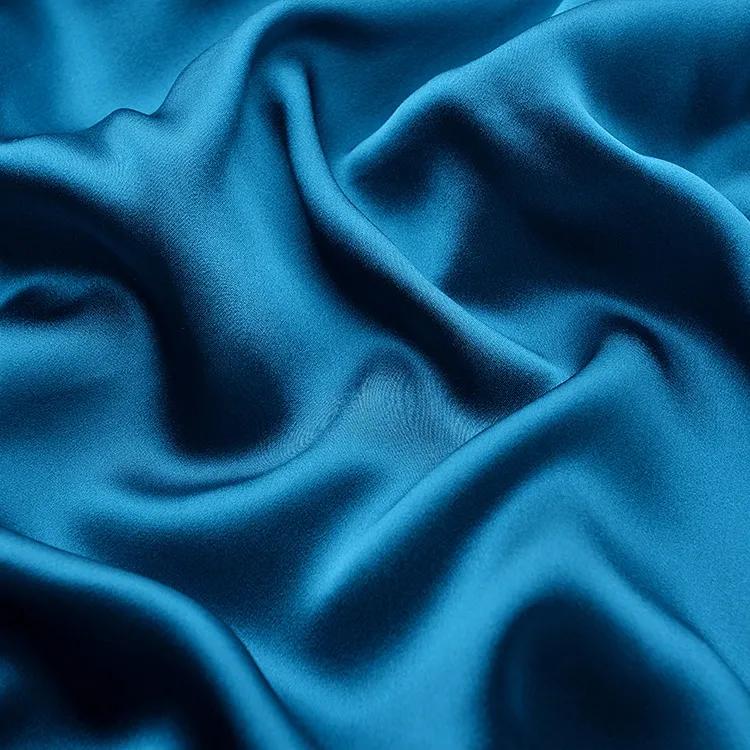
Stretch satin: Similar to plain crepe satin is stretch satin. It is not 100% mulberry silk, but generally contains 5% to 10% spandex. Compared with plain crepe satin, it has certain elasticity, is not easy to wrinkle, and is easy to take care of, making up for the shortcomings of pure silk. Suitable for making scarves, cheongsam, etc. as shown:
Crepe de Chine: The surface is crepey, with slightly concave and convex and wavy scale crepe lines, soft luster, Soft to the touch, comfortable to wear, and has good anti-wrinkle properties. Crepe de chine is easier to recognize, the concave and convex feel is somewhat obvious, the texture is visible, and it is light and slightly transparent. Suitable for making shirts, skirts, etc., it should be one of the most common types of silk among ordinary people. As shown in the picture:
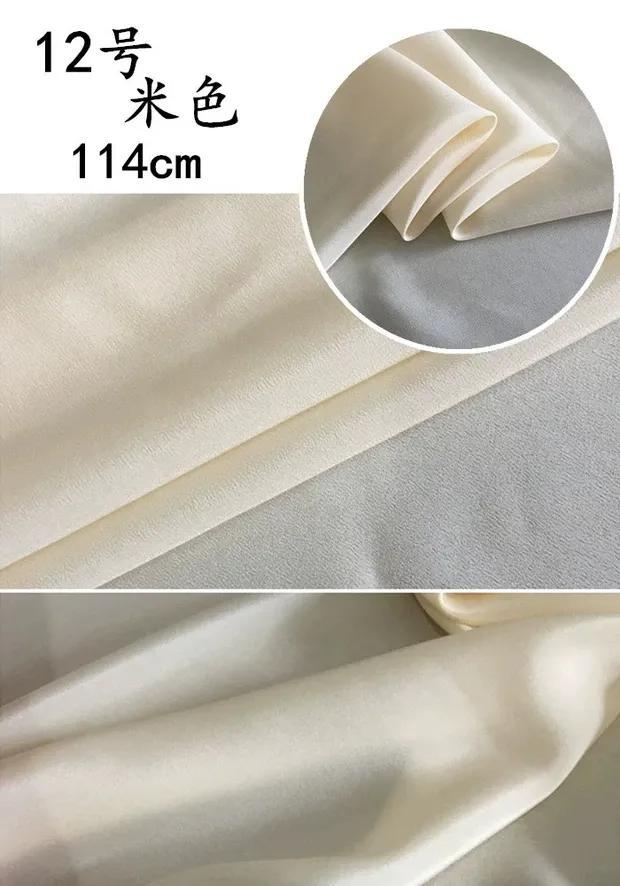
Real silk generally refers to silk, including mulberry silk, tussah silk, castor silk, cassava silk, etc., and is known as the “Queen of Fibers”.
Textile people usually consider the quality of silk from the following aspects:
1. Gram per square meter (g/m2) is the main unit of measurement for fabric texture. Silk is often expressed in mm (m/m). Moomi is a unit of weight, the abbreviation is mm, don’t misunderstand it as millimeters!
1 mmi = 4.3056 grams/square meter
However, the mmi number is not necessarily directly proportional to the quality of silk, so you can choose according to your needs.
The common silk fabrics are 8 mm, 12 mm, 16 mm, 19 mm, and 30 mm. In other words, the larger the number, the heavier the fabric, and the price of silk fabrics is It depends on the weight, so the bigger the Moomi is, the higher the price will generally be.
2. Silk content
SILK is silk, silk. The percentage behind indicates the amount of silk content. For example, SILK100% is an all-silk product
3. Conventional index defects, color fastness, etc.
Main types of silk fabrics
Plain crepe satin
Plain crepe satin: It is a conventional fabric among silk fabrics. The bright satin surface is very noble and has a smooth feel. Cool and dense in texture; this is the silk fabric in the minds of many people. The material used to make cheongsam has a smooth luster like pearls and bright colors!