
It’s summer now, and some fans are already thinking about what clothes to wear in autumn, but there are too many kinds of fabrics and they don’t know which fabric is better, so they are a little confused.
Here we sort out common fabrics and characteristics. In fact, fabrics are mainly divided into natural fibers, regenerated cellulose fibers and synthetic fibers.
1. Natural fibers
Cotton, linen, wool, and silk are the four traditional natural fibers, each belonging to plants. Fiber and animal fiber. Plant fiber is composed of cellulose and lignin arranged in an arrangement. It is generally afraid of acid but not alkali. Alkaline soap or neutral detergent can be used when washing. Animal fiber is mainly composed of protein and is easily denatured in acid and alkali environments. Therefore, animal fiber is not suitable for cleaning with acid and alkali detergents. It is best to dry clean or use neutral detergents, and bleach cannot be used. Cellulose fabrics such as cotton, linen, and wool are hydrophilic. During the dyeing process, the tension causes the fabric to skew in shape. After washing, it is easy to swell and shrink.
Plant fiber:
Cotton (CO). Advantages: ventilated, breathable, good hygroscopicity, easy to wash, soft to the touch; Disadvantages: prone to wrinkles, shrinkage after washing. There are combed cotton and anti-shrink and anti-wrinkle processed cotton fabrics.
Because cotton does not have a good luster, mercerization is required when it must be given a glossy finish for its purpose. Do not use laundry detergent containing fluorescent agents on cotton, nor soak it in bleach.
Jute Jute. Jute is one of the cheapest natural fibers, second only to cotton in terms of planting volume and wide range of uses. It is mainly used to weave sacks and burlap, and can also be woven into backing linen for curtains, chair covers, carpets, burlap and oilcloth. Flax/Linen.
Flax generally refers to the plant flax or roughly processed linen, and linen generally refers to linen, linen thread, and linen products. Advantages: ventilated, breathable, and glossier than cotton; Disadvantages: prone to wrinkles and creases that are difficult to recover. Cool and hard to the touch. How to identify flax: The burning effect is the same as burning hemp rope, it will produce white smoke, and it will be gray-white after burning.
Ramie. Ramie fiber is a specialty product of my country. The moisture absorption and breathability of ramie fiber are about 3-5 times that of cotton fiber. The world-famous Liuyang linen is a handmade product of ramie fiber.
Bamboo. Bamboo fiber is a cellulose fiber extracted from naturally growing bamboo. It is the fifth largest natural fiber after cotton, linen, wool and silk. Bamboo fiber has good air permeability, instant water absorption, strong abrasion resistance and good dyeability.
Animal fiber:
Wool fiber Wool. Advantages: Good hygroscopicity, not easy to wrinkle; Disadvantages: easy to shrink, cannot be stirred in a washing machine, and susceptible to insect damage. Available in pre-shrunk processed wool and cool wool. Common wool fibers are: ① Angora, also known as Mohair; ② Cashmere, mostly called cashmere or cashmere in China; ③ Merino wool, also known as Merino wool. How to identify wool fiber: The burning smell is the same as that of burned hair, and it is curly. After burning, it turns into black fluffy ash and is brittle.
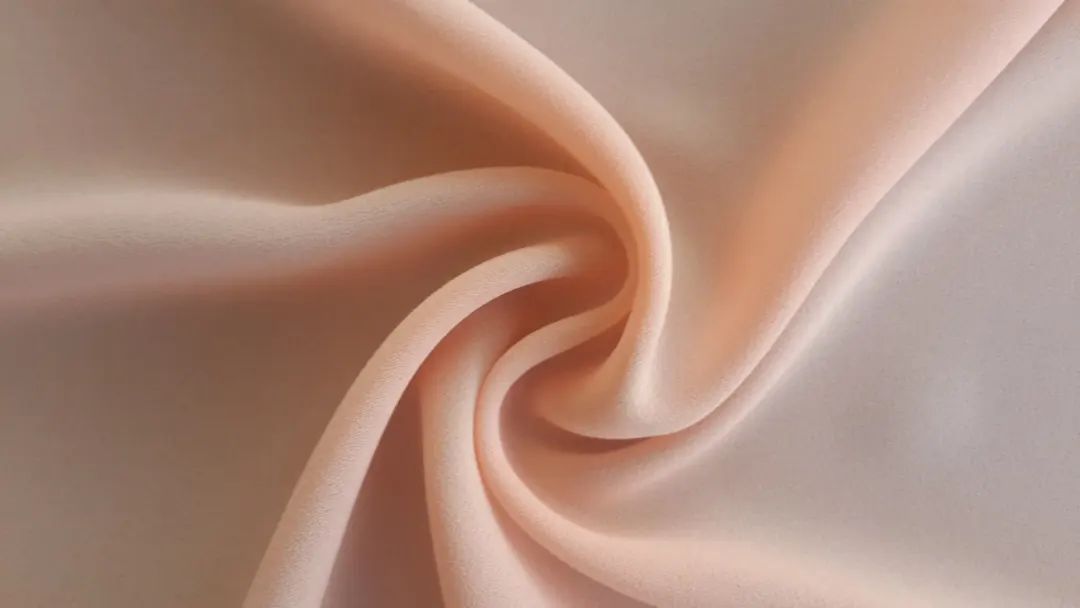
Silk (SE) is the longest natural fiber. Advantages: delicate and soft, good gloss, strong hygroscopicity, not easy to wrinkle; Disadvantages: susceptible to insect damage, not resistant to sunlight. The composition of silk chiffon is 100% silk. The scientific name of chiffon is georgette – georgette is also called georgette crepe. It is a silk fabric woven with strong twisted crepe warp and crepe weft (there is silk chiffon, there is Simulated silk chiffon, its composition is generally 100% polyester). Chiffon and Georgette come from the French CHIFFE and Georgette. How to identify silk: The burning smell is the same as burning hair. After burning, it turns into black fluffy ash and is brittle.
2. Regenerated cellulose fiber
Regenerated cellulose fiber is made from natural cellulose as raw material through chemical methods. Regenerated fiber. In the FTC fiber classification in the United States, any fiber that uses regenerated fiber molecules as raw materials and the hydrogen content in the hydroxyl group does not exceed 15% belongs to Rayon. The Chinese translation is Rayon (léi yíng), and its Chinese translation is inspired by a Chinese legend. It comes from Leizu who invented silkworm rearing in China.
It should be noted that the European ISO does not accept the name Rayon. Advantages of Rayon: ventilation, breathability, good hygroscopicity, easy to wash, soft touch; Disadvantages: prone to wrinkles, shrinkage when exposed to water, and weakened fiber strength. Much like cotton fabrics, it is recommended to dry clean. If washed, use neutral detergent. How to identify Rayon: The burning effect is the same as burning paper, producing white smoke and turning gray after burning.
Viscose Rayon refers to regenerated cellulose fiber made by ordinary viscose method. It has the lowest production cost among all Rayons. Unless otherwise specified, All Viscose Rayon. If high-end Rayon is used, it will usually be marked, such as: Cupro, Lyocell, Modal, etc.
In some places, viscose staple fiber (rayon) is called Rayon, and viscose long fiber (rayon) is called Viscose. In fact, this is a misunderstanding. When pulled out, there are long fibers, and when they are cut, there are short fibers. Long fiber Filament Rayon is translated into rayon (rayon).Because real silk is filament), it is more reasonable to translate short fiber Staple Rayon into artificial cotton.
Cuperammonium Rayon, also called Cupro, Bemberg or cuprammonium filament, because the spinning solution used is copper tetramine hydroxide Cu It is named after the copper complex salt solution composed of (NH3)4COH2.
High-tenacity Rayon (HT) appeared in the early 1940s. For example, Lyocell fiber is a regenerated cellulose fiber produced by wet spinning using natural wood pulp as raw material and N-methylmorpholine-N-oxide (NMMO) as solvent.
It is characterized by high strength, its strength is close to polyester; it absorbs water quickly, its water absorption speed is nearly twice that of cotton, and its moisture regain is also better than cotton; it is fibrillated Produces a peach skin effect.
Although there are many types of fabrics, you can choose fabrics and clothes that suit you based on your own situation~