
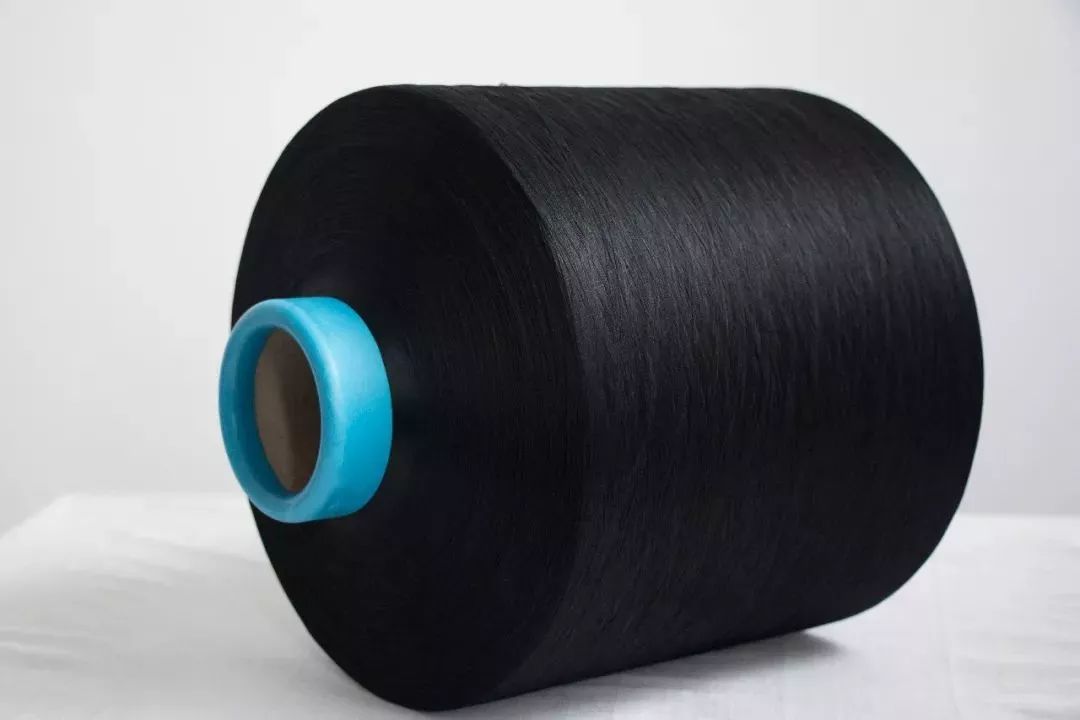
False twisted elastic yarn is made of polyester, nylon and other synthetic fibers. The characteristics of thermoplasticity are that when the fiber is twisted and curled, it is heated and set to fix its twisted and curled state, thereby obtaining a fluffy, elastic and twist-free stretch yarn. Because the thread has a slight torque but no twist, it has better elasticity. Therefore it is called false twisted elastic yarn.
There are mainly five types of false-twisted elastic yarns
(1) General false-twisted yarns: That is, the fibers are twisted to a certain Once the shape is untwisted, the silk thread maintains the bulkiness of the twisted state, but has no twist. The traditional processing method uses the above three-step method, but currently it is completed in one step on the false twist elastic yarn machine. Its fibers have good torsion and elasticity, so crepe fabrics and elastic fabrics with better crepe effect can be developed.
(2) Solid-twisted false-twisted silk: In order to make the product obtain a comfortable effect due to the fluffy false-twisted elastic silk, and at the same time have ideal bundling properties, so that After the fabric obtains a good texture effect, people add a certain degree of twist to the false-twisted elastic yarn machine to form real-twisted false-twisted elastic yarn. At present, real twist and false twist elastic yarn can be completed on the false twist and real twist one-step texturing machine.
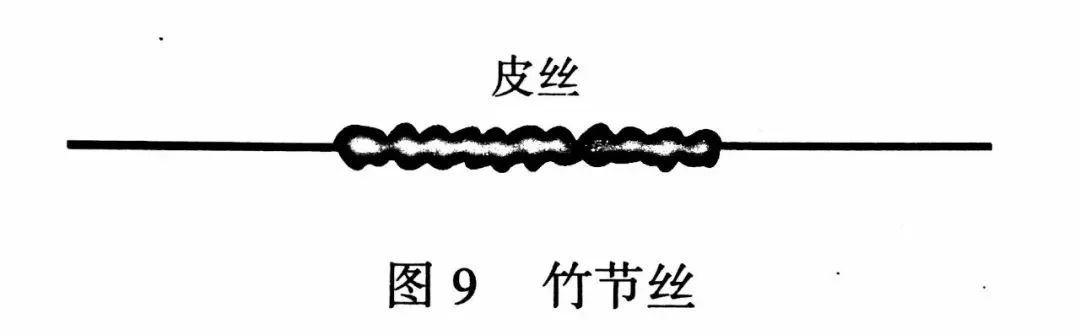
(3) Slub yarn: Mix false twisted elastic yarn with other single filaments and twist them. Due to the gap overfeeding, the surface of the mixed fiber has regular patterns. This bamboo segment is completely covered by skin yarn, while the non-bamboo segment is made of skin yarn and core yarn twisted side by side. This is the bamboo yarn developed on the market (Figure 9). There are more than 10 varieties currently developed, such as white polyester FDY (fully drawn yarn) as leather yarn, white polyester FDY as core yarn, knotty yarn that mainly embodies the embossed effect of the bamboo section. Common specifications are 240dtex/60f.
Cationic polyester FDY is leather yarn and white polyester FDY is core yarn. It mainly embodies the cationic color-absorbing effect of bamboo sections. Common specifications are 222dtex/54f and 226dtex/60f. White polyester FDY is leather yarn and white nylon FDY is core yarn. It mainly reflects the white effect of bamboo segments. Common specifications are 222dtex/56f.
(200 denier/56f), 222dtex/60f(
200 denier/60f). The length of the bamboo sections of slub silk ranges from 1 to 15cm, and the number of bamboo sections per meter can be adjusted from 3 to 10. The tightness of the bamboo sections can be caused by tight cohesion without slipping, or it can be caused by loose cohesion. slip.
(4) Uneven false twist yarn:Use MOY (medium speed spinning) polyester, or POY (Pre-oriented yarn, high-speed spinning) polyester is used as raw material and is made by drawing and false twisting on a one-step machine. In the drafting section, the thick details of the yarn are produced due to the difference in stretching. After the deformation of the false twist section, the yarn has both a thick appearance and fluffy performance. The produced textured yarn with thick details is said to be uneven. False twisted silk.
Since the false twist texturing machine has been innovatively improved to allow two raw materials to be fed and processed simultaneously through dual wire channels, product varieties have been increased, such as using uneven polyester yarn with long slugs and short details as the sheath. The raw material formed by using FDY (fully drawn yarn) polyester as the core and through the network can have 1 to 3 thick spots per meter, and no place has 2 to 6 cm of thick spots.
It is a raw material formed by using uneven polyester yarn with short stubs and long details as the sheath, FDY polyester as the core, and a network. It is a raw material formed by using cationic polyester with short slubs and long details as the sheath, FDY polyester as the core, and a network. It is a raw material formed by cationic polyester with short slugs and ordinary polyester with short slugs juxtaposed and networked.
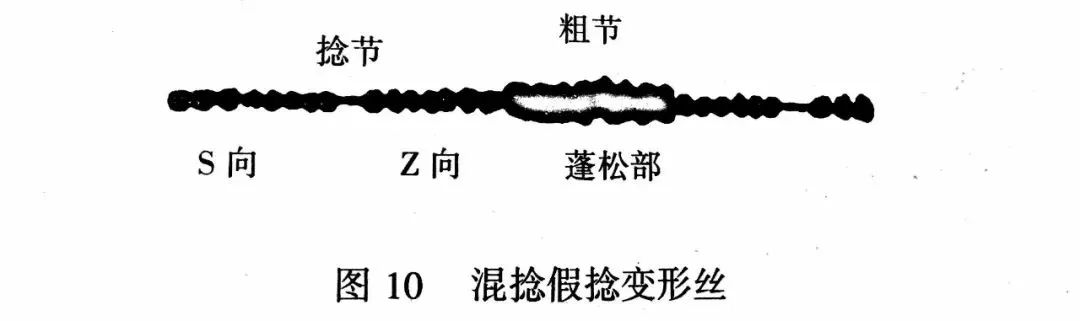
(5) Mixed twist and false twist:During the processing of silk strips, two twists, positive and negative, are formed in the twisting area and the untwisting area, so generally speaking, The positive and negative twists cancel out and become “no twist”, but there are positive and negative twists in some parts of the filament, thus forming mixed twist and false twist deformed yarn (Figure 10), which has two types: single-strand type and mixed fiber type.
Single-strand type is single-filament mixed-twisted false-twisted yarn. The twisted section of the silk strip shows finer twist knots due to the tight wrapping of the fibers, while the untwisted section has a fluffy and thick silk body. The length of knots, twist joints and thick joints can be adjusted. The mixed fiber type combines two types of single-filament mixed-twisted and false-twisted yarns to form a two-color effect, a different shrinkage effect, and three combinations of random polyester, cationic polyester and colored yarns of the two fibers.