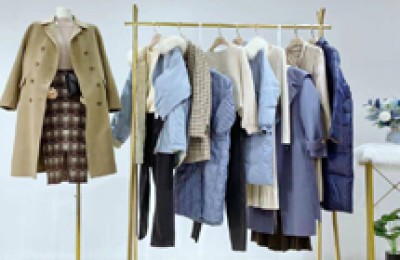

Have you ever encountered the following pitfalls when buying clothes? When I looked at the model, the pattern was quite wide, but it felt soft when I got it. I wanted to buy something that was soft and skin-friendly, but when I bought it, it was a bit firm or even pierced my body. The quality I bought was not good, it didn’t feel the way I wanted, or I bought something I liked. Yes, but it pills like crazy when wearing it, making it impossible to wear.
Teach you the most basic knowledge of fabric classification and classification, which is very easy to remember and allows you to easily buy clothes that are good-fitting, comfortable and cost-effective
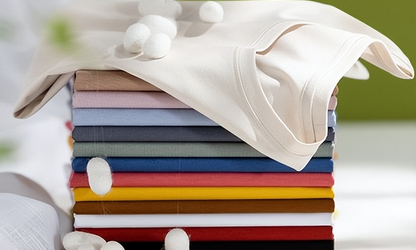
Fabrics can be divided into three categories based on materials: natural fibers, regenerated fibers, and chemical fibers
Natural fibers refer to natural fibers or artificial fibers Textile fibers obtained from cultivated animals and plants, such as the most familiar cotton, linen, silk, and wool, are the four major natural fibers
The common advantage is that they have no static electricity (except wool) ), moisture-absorbing and breathable, relatively soft, with a certain degree of gloss. The disadvantages are that it is easy to wrinkle, shrink, and fade.
Natural materials have become more popular in the past two years. The prices of cotton, linen, silk and wool have increased. Regardless of whether the raw materials are good or bad! As long as natural materials are available, prices have increased a lot. Sisters and aunties who want to know more about cotton, linen and silk can click on my avatar to take a look. I have written about these materials in depth before.
Regenerated fiber refers to textile fibers that are inspired by silkworm spinning, use natural cellulose and natural protein as raw materials, and undergo chemical processing (because these natural fibers Protein cannot be used directly like cotton, linen, silk and wool. It must be processed.) The main raw materials they use are fine linters from cotton and wood pulp from various trees. Different materials and different processes will produce Different effects. For example, the main raw material of soybean fiber is the soybean we commonly see in our daily life.
You read that right, they are edible soybeans. The main raw material of Lyocell is beech wood, which is called Qinggang tree in China
Beech wood, which is called Qinggang tree in China
The commonly used raw material for Modal is eucalyptus. This is also the reason why many companies call it eucalyptus bark fabric
The advantage of regenerated fiber is that it is basically resistant to static electricity, moisture-absorbing and breathable, even better than pure cotton, it is soft and skin-friendly, and does not fade and wrinkle easily
The disadvantages are high cost, troublesome process, and poor elasticity
Eucalyptus trees, especially in Guangxi,
I put them The advantages and disadvantages of each are made into a table. You can save it and read it later. There is no charge! If you find it useful, please leave me a comment, favorite, and forward! Good things should be seen by everyone
Advantages and Disadvantages of Regenerated Fiber
The main raw material of chemical fiber is petroleum. Petroleum is refined and synthesized into chemical fiber chemical The four major fiber materials are polyester, acrylic, spandex, and nylon
The biggest advantage is that the colors are bright and do not fade, they drape well and are quite wide, very strong and durable, and most importantly, they are very cheap
The disadvantages are that it is easy to generate static electricity, has poor hygroscopicity, poor heat resistance, and easily absorbs dust. Pure chemical fibers feel uncomfortable when worn in summer
Nowadays, these four major chemicals fiber. Many are blended with other recycled fibers or natural fibers. For example, add polyester to resist wrinkles, add nylon to resist wear, and add spandex to increase elasticity.
Many of our summer sundresses that are wrinkle-resistant and drapey are made of polyester. Other fabric components neutralize the shortcomings of polyester’s stuffiness. Nylon is also used in autumn windbreakers, and most cheap sweaters are acrylic! Oh, right! Don’t buy sweaters that contain a lot of acrylic or even full acrylic. No. Not just sweaters, but all woven sweaters, cardigans, sweater dresses, those containing acrylic or even full acrylic are best not to buy! The static electricity is very high and will pill like crazy! It pills to the point where you don’t want to wear it again within a month or two. If you don’t care about pilling, just pretend I didn’t say that. (Sweaters and cardigans containing acrylic and full acrylic are easily sold to consumers as wool by some people.) Everyone must pay attention to distinguish them in autumn and winter!
Acrylic sweaters
Give you some cool knowledge. Many years ago. The population is growing rapidly. Agricultural productivity is not developed enough. In order to solve the problem of food, a policy was formulated that cotton would not compete with grain for land. At that time, most people wore pure cotton and coarse cloth. Insufficient cotton production will naturally lead to clothing shortages. Buying clothes in those days was not like it is now. Most of them are sold with cotton tickets. At that time, we wanted to solve the problem of clothing shortage, but we could not occupy farmland to grow cotton. Then we can only think of a solution based on the material.
In the 1970s we came from Japan, France and then Germany. Chemical fiber production equipment was introduced, and from then on it was possible to use synthetic fibers to make clothes. So a kind of really good fabric became popular in the 1980s and 1990s. It was not comfortable to wear. It was neither close-fitting nor sweat-absorbent. It was very stuffy when worn in hot weather. However, it also had many advantages: it did not wrinkle, shrink, or fade. It looks lean and tall when worn, which is a different fashion for people who were accustomed to wearing cotton and coarse cloth at that time. The most important thing is that the annual output of Deliang reaches an astonishing 1.9 billion square meters! How many times�It can meet people’s clothing needs, and it is no longer as embarrassing as the time when food stamps were distributed. Those born in the 90s, 80s, 70s, 60s and 50s should all know that indeed is cool. It was very popular at that time many years ago. Fabric used to make short-sleeved shirts and pants
But it slowly disappeared and no one could find it. In fact, it is polyester among chemical fibers.