
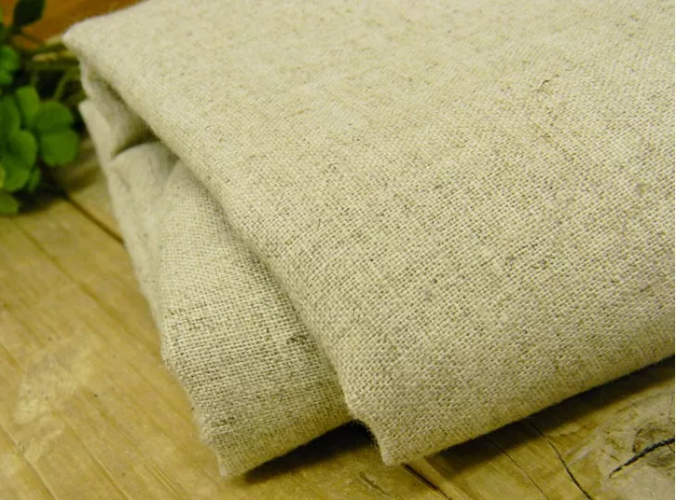
Fax fiber is divided into two types: stem fiber and leaf fiber.
Stem fiber is fiber obtained from the stems of hemp plants. Stem fiber exists in the phloem of the stem, so it is also called bast fiber. There are many varieties of this type of fiber, and the main ones used more in textiles are ramie, flax, hemp and jute.
Ramie: Originated in China, it is known as Chinese grass and has the largest output in my country. It is of high quality, has good luster, and is bluish-white or yellow-white. Ramie fabric is suitable for summer fabrics and suit fabrics. It is also an excellent fabric for drawing yarn and embroidery crafts.
Flax: It has strong adaptability to climate and has a wide planting area. The former Soviet Union produced the most, and the main producing areas in my country are Heilongjiang, Jilin and other provinces. The quality of flax is also good, and it is light yellow after degumming. It has a wide range of uses. In addition to clothing and decoration, it can also be used for industrial fabrics such as hoses.
Hemp (hemp): The properties of the fiber are similar to flax, and it is often used as a substitute for flax in Europe.
Jute: Due to its fast moisture absorption and high strength, it is often used as wrapping materials such as sacks and linen, carpets and floor coverings.
Leaf fiber is fiber obtained from the leaves or leaf sheaths of hemp plants, such as sisal (sisal), abaca (Manila hemp), etc. This type of hemp fiber is relatively thick and hard, and is commercially called hard fiber. The fiber is long, high in strength, resistant to seawater corrosion, and not prone to mildew. It is generally used for rope making, packaging cloth, etc.
Preparing hemp fiber from the bast of the stem fiber requires preliminary processing such as degumming to separate the fiber pieces from the hemp stem, epidermis or leaf mesophy of the plant, and remove some surrounding gum and non-fibrous substances. As a result, hemp fiber suitable for textile processing is obtained. Various hemp fibers have different sources, properties, and uses, and the degumming methods and requirements are different. According to the principle of degumming, it can be roughly divided into chemical degumming methods that utilize the different stability of cellulose and colloid to acids, alkalis, and oxidants, and microbial degumming methods that use microorganisms to use colloid as a carbon nutrient source.
The basic properties of commonly used hemp fibers such as ramie, flax, jute and hemp:
1. Composition of hemp fiber: The main component of hemp fiber is cellulose, and its content depends on the Depends on the type of hemp.
2. Morphological structure of hemp fiber: Different types of hemp fiber have different cross-sectional shapes. Ramies are mostly waist-shaped, with a central cavity and cracks in the cell wall. Linen and jute are polygonal in cross-section and also have a central cavity. The longitudinal surface of hemp fiber is mostly straight, with horizontal knots and vertical lines.
3. Length and linear density: The length uniformity and linear density uniformity of hemp fiber are relatively poor, so the uniformity of the spun yarn is also poor, with unique thick places, forming hemp fiber. Fabric rugged style. Except for ramie, other types of linen are further separated due to the combing action of the combing needles after combing to adapt to the requirements of the spinning process.
4. Hygroscopicity: Hemp fiber has stronger hygroscopicity than cotton, and absorbs and disperses moisture faster.
5. Strong stretchability: Hemp fiber is the fiber with the highest tensile strength among the main natural fibers: cotton, linen, wool, and silk, and its wet strength is greater than its dry strength. However, the elongation of hemp fiber is the smallest among the main natural fibers, with an elongation at break of about 2% to 3%.
6. Rigidity and flexibility: The rigidity of hemp fiber is the largest among common fibers. It not only feels rough and hard, but also makes the fiber difficult to twist, affecting spinnability, and the yarn has a lot of hairiness. Therefore, pure hemp fabric There is often a tingling sensation. However, its strong rigidity makes the linen fabric less likely to stick to the body after absorbing sweat.
7. Chemical stability: Since the chemical composition is mainly cellulose, the chemical stability of hemp fiber is similar to that of cotton, and it is more resistant to alkali but not acid.
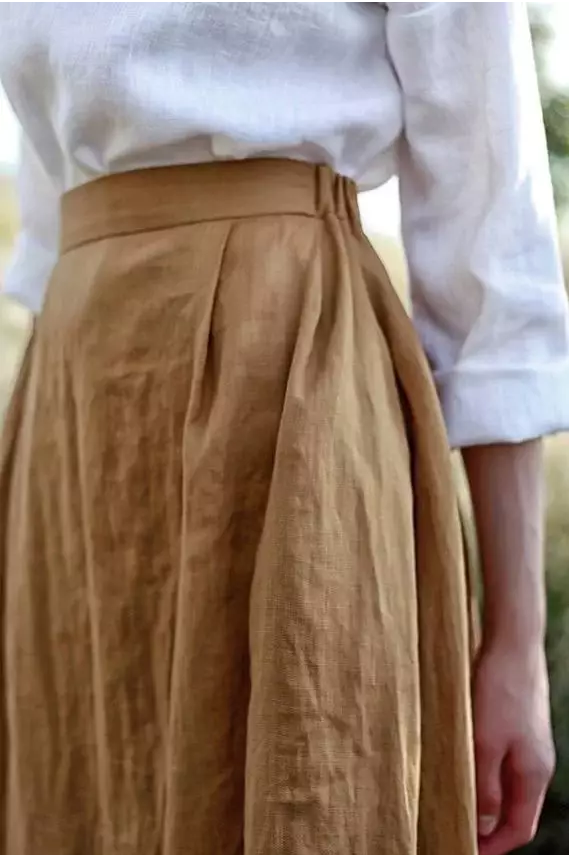
8. Elasticity: Hemp fiber has poor elasticity, so pure hemp fabrics wrinkle easily. Hemp fiber and polyester are often blended to make cool and breathable linen.