
In daily life, the clothes we wear are made of different fabrics, and the appearance and feel of the clothes are also closely related to the fabrics.
Among them, satin is a more special kind of fabric, and few friends know about it. Today, this article will take you into the world of satin cloth.
1. What is satin
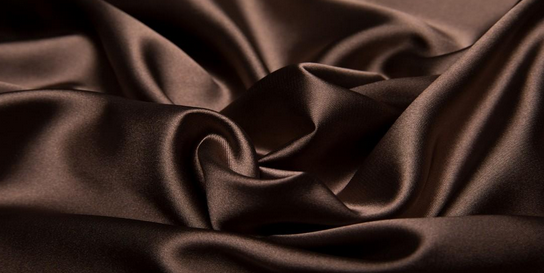
“Satin cloth” is a transliteration of the foreign language satin, also known as satin cloth. The cloth surface has Charm, with its advantages of lightness, suppleness, elasticity, comfort and luster, is similar to five-piece satin and eight-piece satin in appearance and touch. The specifications are usually 75×100D, 75×150D, etc.
There are many raw materials for making “satin cloth”. Cotton, blended fabric, polyester, purified fiber, etc. are all satin tissue fabrics, among which polyester is a common tissue raw material on the market.
This is also the main reason why many people say that “satin cloth is made of polyester”.
The following are some common components of satin cloth:
(1) 95% polyester + 5% spandex: warp knitting, bright, plain or printed, weight : 180g/㎡, door width: 150-160CM;
(2) 92% polyester + 8% spandex: warp knitting, bright, plain or printed, weight: 210g/㎡, Door width: 150-160CM;
(3) 95% nylon + 5% spandex: warp knitting, bright, plain or printed, weight: 170g/㎡, door width: 150-160CM ;
(4) 92% nylon + 8% spandex: warp knitted, bright, plain or printed, weight: 220g/㎡, width: 150-160CM;
2. Color and shape
Satin cloth has excellent gloss, the front side is bright and the pattern is clear. In terms of elasticity, it is a double-sided stretch fabric. It has good drape and three-dimensional effect, and it feels soft and simulated. silk effect.
Because of this, satin fabric has a wide range of uses. It can not only be used as a bed material, but also can be used to make casual trousers, sportswear, suits, etc. Among them, various types of women’s clothing, pajama fabrics, underwear, etc. made of satin fabrics are very popular.
In particular, the “jacquard satin” fabric garments, which integrate comfort, modernity and artistry, have attracted customers with its attractive charm, and the sales are very good. It is expected that the satin series products The market outlook will continue to be hot.
3. Cutting method
After the previous description, we learned that satin fabric has excellent elasticity and can be stretched on both sides, and the cutting of elastic fabric has always been a major problem for garment processing factories. Because when cutting, the slightest stretch of elasticity is very likely to cause inconvenience or even make it impossible to sew the garment later.
Therefore, the cutting of satin fabrics mostly adopts intelligent cutting methods, using intelligent cutting equipment for cutting. First, input the cutting pattern into the intelligent cutting equipment, and use the machine’s intelligent cutting system to perform a series of operations such as loading, typesetting, marking with a scribing pen, cutting, and automatic unloading.
The whole process does not require manual pattern making or cutting, and there is no need to spend a lot of money to hire professional tailors to cut. Only one ordinary employee can operate the cutting equipment to complete all the work, saving time, effort, and Save labor and save money.
The use of blade cutting equipment is recommended here, and laser is not recommended, because thermal cutting such as laser will burn the fabric to a large extent and reduce the cutting quality, thus affecting the quality of garments and subsequently affecting sales.
4. Disadvantages of satin
As we know, most of the satin sold on the market is composed of polyester, which also causes the color to be Dingbu has the same shortcomings as polyester, which are as follows:
(1) It has poor melt resistance and can easily form holes when exposed to soot, sparks, etc. Therefore, you should try to avoid contact with cigarette butts, sparks, etc. when wearing it.
(2) The dyeability is poor, but the color fastness is good and it is not easy to fade. Because there are no specific dyeing groups on the polyester molecular chain and the polarity is small, it is difficult to dye, the dyeability is poor, and the dye molecules cannot easily enter the fiber.
(3) It has poor hygroscopicity and feels stuffy when worn. It is also prone to static electricity and dust contamination, affecting its appearance and comfort. It dries easily after washing, has almost no loss in wet strength, does not deform, and has good washable and wearable properties.
Part of the knowledge about satin ends here. If you want to know more about fabrics, please leave a message for discussion.
If you are interested in fabric cutting, please leave a private message and make progress together!