

1. Introduction:
PA, polyamide, commonly known as nylon, is an engineering material with excellent performance Plastic has excellent mechanical properties, outstanding corrosion resistance, oil resistance, heat resistance, high modulus and other advantages. Reinforcement and flame retardant modification can significantly improve its heat resistance, modulus dimensional stability and flame retardancy. It is widely used in automobiles, electronics, electric tools and other industries. The main varieties of PA are PA6 and PA66, which are absolutely dominant, followed by PA11, PA12, PA610, PA
612 etc.
2. Features
Nylon is used in large quantities Engineering plastics. Widely used in machinery, electrical appliances, textile equipment, chemical equipment, aviation and other fields. It has become an indispensable structural material in all walks of life. Its main features are as follows:
a. Excellent mechanical properties. High mechanical strength and good toughness.
b. Excellent heat resistance. Highly crystalline nylons such as nylon 46 have a very high heat distortion temperature and can be used for a long time at 150°C. After PA66 is reinforced with glass fiber, its heat distortion temperature reaches above 250°C.
c. Excellent electrical insulation properties. Nylon has high volume resistance and high breakdown voltage resistance. It is an excellent electrical and electrical insulating material;
d. Good self-lubricating and friction resistance. Nylon has good self-lubricating properties and small friction coefficient, so it has a long service life as a transmission component;
e. Excellent weather resistance
f. Water absorption: Nylon has high water absorption, and the saturated water can reach more than 3%. Affects the dimensional stability of the parts to a certain extent;
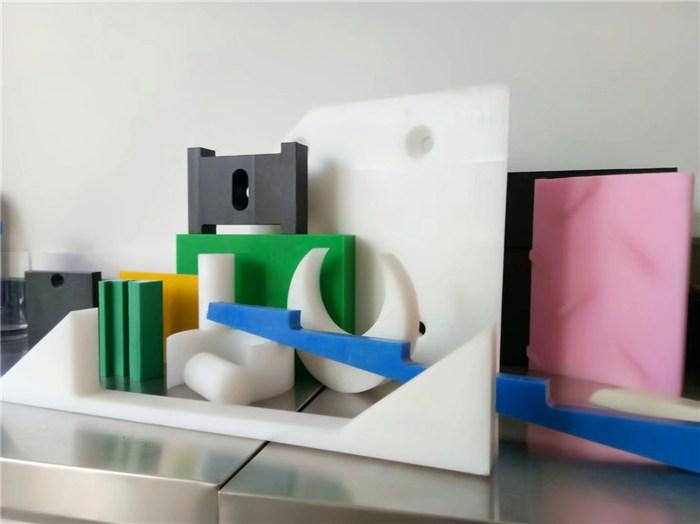
3. The difference between PA6 and PA66
Differences in physical properties
Nylon 6 (PA6) is polycaprolactam. Nylon 66 (PA66) is polyhexamethylene adipate. PA66 is 12% harder than PA6. The chemical and physical properties of PA6 are very similar to PA66. However, its melting point is lower and the process temperature range is wide. Its impact resistance and dissolution resistance are better than PA66, but it is also more hygroscopic. PA66 is a semi-crystalline material with a higher melting point and can maintain strong strength and stiffness at higher temperatures.
Product performance differences
PA6: excellent thermal stability, high heat resistance; impact resistance and The solubility is better than PA66, the material has good dimensional stability; high surface quality; good anti-warping property;
PA66: has excellent wear resistance and good high impact resistance , good dimensional stability.
Differences in uses
PA6: generally used in auto parts, mechanical parts, electronic and electrical products, engineering accessories, etc. Products;
PA66: widely used in the automotive industry, instrument housings and other products that require impact resistance and high strength requirements, such as marine propellers, gears, rollers, Pulleys, rollers, impellers in pump bodies, fan blades, high-pressure seals, valve seats, gaskets, bushings, various handles, support frames, inner layers of wire packages, etc.