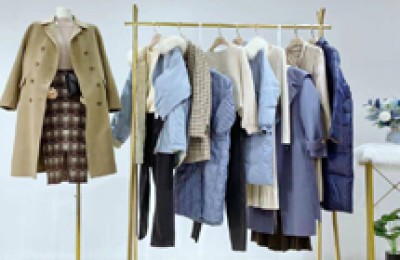

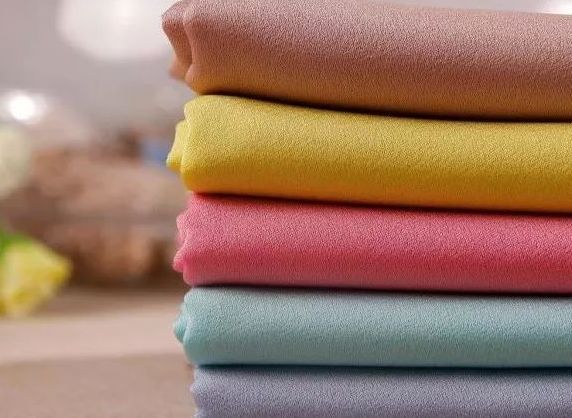
“This is a high-grade acetic acid fabric imported from abroad. It is very comfortable to wear…” If you often visit women’s clothing stores or Taobao stores, you may be familiar with these slogans often mentioned by shopping guides. The editor has noticed that no matter online or offline, a piece of clothing with good workmanship and appearance, claiming to be imported acetic acid fabric, often sells for several hundred yuan. So, what is this imported acetic acid fabric?
Acetate fabric is a fabric woven from acetate fiber. Acetate fiber has the same unique properties as silk, with bright fiber luster and color, excellent drape and hand feel. The knitted fabrics produced with it have smooth feel, comfortable wearing, moisture absorption and breathability, light texture, low moisture regain, not easy to pilling, and antistatic. Fabrics such as knitted georgette and popcorn woven with acetate fibers are preferred by consumers.
What exactly is acetate?
Acetate fiber, also known as acetate fiber, is one of the earliest chemical fibers developed in the world. It is currently the second largest variety of regenerated cellulose fiber after viscose fiber. Cellulose acetate is made from cellulose pulp, which is acetylated to form cellulose esterified derivatives and then dry-spinning. According to the degree of substitution of hydroxyl group (-OH) in cellulose with acetyl group (-COCH3), it is divided into cellulose triacetate (CTA) and cellulose diacetate (CDA). When triacetate fiber is not specifically mentioned, acetate fiber generally refers to diacetate fiber.
What are the characteristics of acetate fiber?
1. Good thermoplasticity: acetate fiber softens at 200℃~230℃ and melts at 260℃. This feature makes acetate fiber thermoplastic similar to synthetic fiber, and its shape does not change after plastic deformation. It recovers again and the deformation is permanent. Acetate fabric has good formability, can beautify the curves of the human body, and is overall generous and elegant.
2. Excellent dyeability: Acetate fiber can usually be dyed with disperse dyes, and has good coloring performance and bright colors. Its coloring performance is better than other cellulose fibers. Acetate fabric has good thermoplasticity. Acetate fiber softens at 200°C ~ 230°C and melts at 260°C. It is similar to synthetic fiber. After plastic deformation, the shape will no longer recover, and the deformation is permanent.
3. Looks like mulberry silk: The appearance and luster of acetate fiber is similar to mulberry silk, and its soft and smooth feel is also similar to mulberry silk. Its specific gravity is the same as mulberry silk, so the drape is the same as mulberry silk. . Fabrics woven from acetate silk are easy to wash and dry. Acetate fabrics are mildew-free and have better elasticity than viscose fibers.
4. Performance close to mulberry silk: Compared with the physical and mechanical properties of viscose fiber and mulberry silk, acetate fiber has lower strength and larger elongation at break. Although the ratio of wet strength to dry strength It is lower, but higher than viscose silk. The initial modulus is small. The moisture regain is lower than viscose fiber and mulberry silk, but higher than synthetic fiber. The ratio of its wet strength to dry strength, relative hook strength and knotting strength, The elastic recovery rate is not much different from that of mulberry silk. Therefore, the performance of acetate fiber is closest to that of mulberry silk among chemical fibers.
5. Acetate fabrics are not prone to static electricity: they are not easy to absorb dust in the air; they can be dry-cleaned, washed in water, or machine-washed below 40°C, which overcomes the problem that silk-wool fabrics are prone to bacteria; they are dusty and can only be dry-cleaned It has no shortcomings of woolen fabrics being easy to be eaten by insects. It is easy to take care of and collect, and acetic acid fabrics have the resilience and smooth feel of woolen fabrics.
The history of acetate fiber
It has been more than a hundred years since the first fiber acetate was successfully spun. Industrial production of acetate began in the 20s
The beginning of the century. In 1901, A. Eisingern and Bell successfully acetylated cellulose to obtain triacetate cellulose. 1904 Bayor, Germany
The company invented dry-spinning cellulose acetate fiber and applied for patents in France and the United Kingdom; in 1905, it discovered that diacetate could be dissolved in acetone to form a cellulose acetate solution.
Provides guarantee for the production of cellulose acetate fiber.
In the early days, acetate fiber developed very slowly because it was difficult to dye it with common natural fiber dyes, which limited its application in the textile field. It was not until 1954 to 1955 that cellulose triacetate was successfully industrially produced by certain companies in the United States, the United Kingdom, Canada, France and Germany. From 1969 to 1979, due to the rise of synthetic fibers such as nylon, polyester and polypropylene, the demand for diacetate and triacetate textile fibers continued to decline.
The U.S. market declines by approximately 4.20% annually, and the world market declines by approximately 2.20% annually. since 80
Since the early 1990s, due to the difficulty in solving the pollution problem in viscose fiber production, some manufacturers in developed countries have closed down.
This has led to a rapid increase in demand for acetate filament. In recent years, due to the continuous updating and development of product varieties and production technologies, acetate fiber has become one of the fastest growing varieties in the man-made fiber industry.
There are currently 20 acetate fiber manufacturers in the world.
There are many companies located in Belgium, Brazil, Bulgaria, Colombia, Italy, Mexico, Uruguay, Canada, Germany, CIS, Japan, the United Kingdom, and the United States, but the production technology is monopolized by a few countries. The dominant one is American Celanese
The company accounts for about half of the world’s total output, followed by Eastman Chemical Company of the United States and Novaceta of Italy.
company, �Japan’s Mitsubishi Corporation and Teijin Corporation, as well as the British Acordis Company and the French Rodia Company, etc., the total output of these companies accounts for about 90% of the global total output.
my country’s acetate fiber industry began in the 1950s. It has developed slowly, the production technology is relatively backward, and the varieties are limited to acetate tow for cigarettes. Acetate fiber for textile use has relied on imports over the years, mainly from four major companies: Celanese Company of the United States, Contax Company of the United Kingdom, Celanese Company of Canada, and Mitsubishi Company of Japan.
The application of acetate fiber in the textile industry
According to statistics,
80% of the acetate fiber produced globally is used to make cigarette filter holders.
Acetate fiber used in textiles accounts for a relatively small proportion. Foreign research on the application of acetate fiber in the textile industry started early; in my country, at first, due to the inadequate production technology of acetate fiber filament,
This makes the application of acetate filament far lower than that of viscose fiber. In recent years, with the improvement of the technical level of the acetate industry and the continuous deepening of research on acetate filament, acetate filament has been widely used in the textile industry.
Widely used in clothing linings, pajamas, and underwear. By blending with polyester filament, nylon filament, viscose fiber, bamboo fiber and silk, etc., composite yarns with more diverse properties can be made into sportswear, men’s and women’s fashion, men’s and women’s dresses, casual wear and other elegant styles. , high-quality clothing. Acetate fiber filament can also be made into satin fabrics, knitted fabrics, decorative satins, base materials for embroidery products, embossed silk, bubble fabrics, yarn-dyed silk, acetic silk ammonia-covered yarn, etc.
How to wash clothes made of acetic acid fabrics?
In fact, clothes made of acetic acid fabrics can be dry-cleaned or washed. The disadvantage is that they are not acid-resistant. Therefore, when washing, try to use neutral detergent or silk-wool detergent. The specific steps are as follows:
The first step is to soak in clean water for 10 minutes. Water at natural temperature is fine. Do not use hot water, because hot water can easily cause stains to melt into the fibers of clothing or burn the material.
The second step is to take it out and put in detergent, stir well, and then put in clothes to make them fully contact with the washing solution.
The third step is to soak for 10 minutes. Note that if the washing instructions do not allow soaking, you should follow the instructions.
The fourth step is to stir and rub the solution repeatedly. Apply soap to the particularly dirty areas and rub gently.
The fifth step is to wash off the solution. It can be washed off after about 3 or 4 times. If it is dirty or has stubborn stains: first use a small brush dipped in gasoline and gently scrub to remove the grease, then wash it off with warm detergent solution; you can use sparkling mineral water or soda water for bartending, and pour it on It is very effective to dab the stained area with a clean cloth.