
Sweatshirts are the most suitable item for autumn and winter because they look casual and fashionable. Autumn and winter are also the best seasons to buy sweatshirts. When we develop sweatshirts, in addition to paying attention to the style of the clothes, we must also pay attention to the quality of the clothes. Learn this knowledge and earn more repeat customers and good reputation!
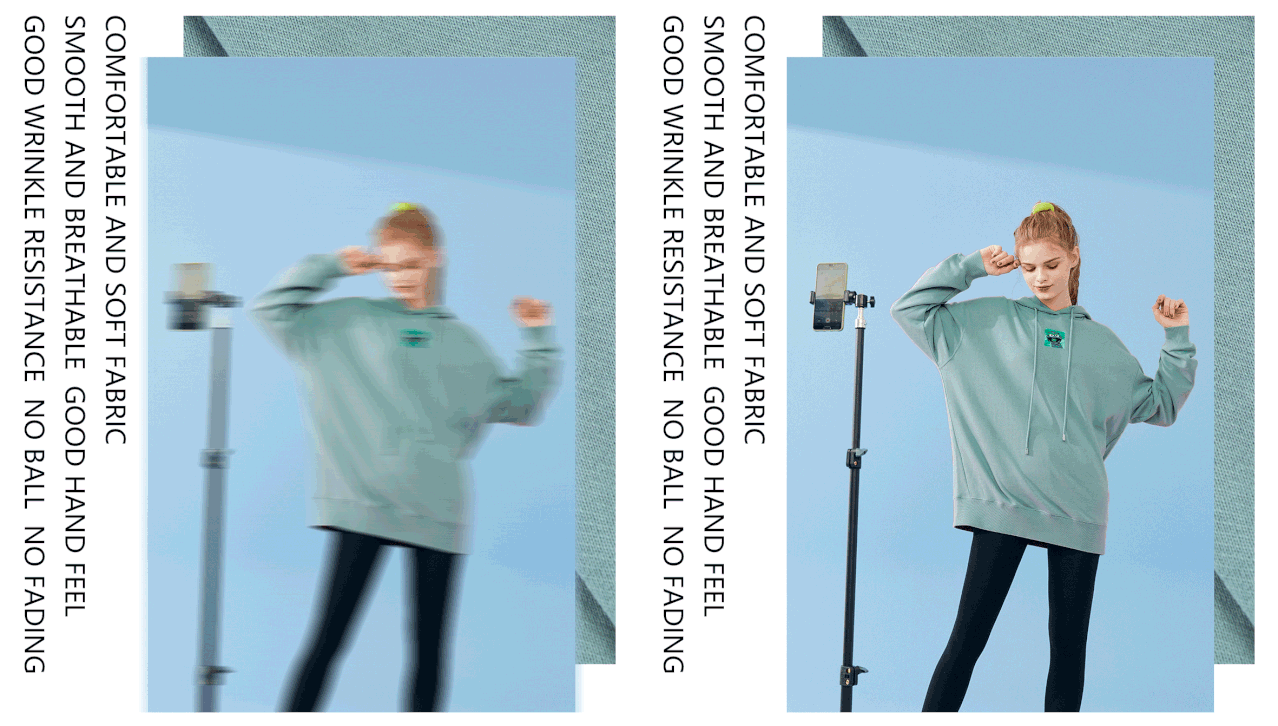
Let’s first learn about sweatshirt cloth
Sweatshirt cloth
Sweatshirt fabric is a kind of knitted fabric, which is French in English.
terry,
After pulling the hair, it is called fleece. This type of knitted fabric is mostly made of displacement yarn, so it is called displacement fabric or sweatshirt fabric. In some places it is called terry cloth, and in other places it is called fish scale cloth. There are many varieties. (Fish scale cloth is named because the back of the cloth is terry cloth, and some of them look like fish scales.) The weight is generally 190g/M2 -350g/M2.
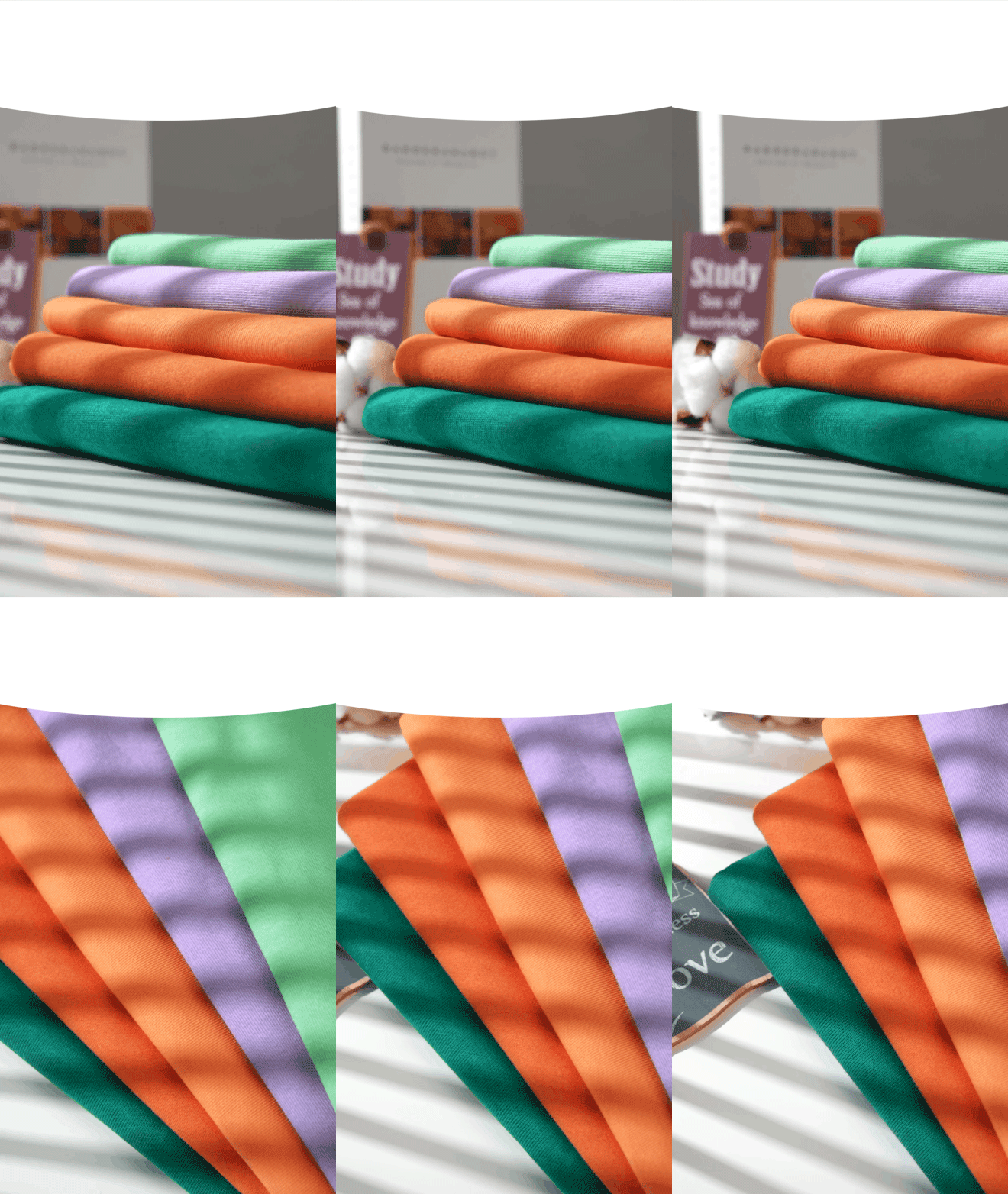
According to thickness, it can be divided into:
1. Generally, those below 250g. In the market, it is called a small sweatshirt, some people call it a sweatshirt, and some people call it a single sweatshirt. Because it is woven from a single yarn, it is relatively thin compared to this variety. Small sweatshirts have smaller loops and are called small terry cloth
2. Those weighing more than 280g are called big sweatshirts in the market, and some people call them double sweatshirts because they are made of It is woven with two or even three yarns, so this kind of cloth is relatively thick. The loops of the David’s coat are obviously larger, so people call them big loops.
On the terry surface on the back side, you can also scratch the hair. Some people call it brushing, others call it painting, and some call it pulling. Meaning, it’s called differently in different places. This kind of fleece fleece will be thicker and warmer than the original terry cloth without fleece. This kind of cloth is generally around 280g-320g.
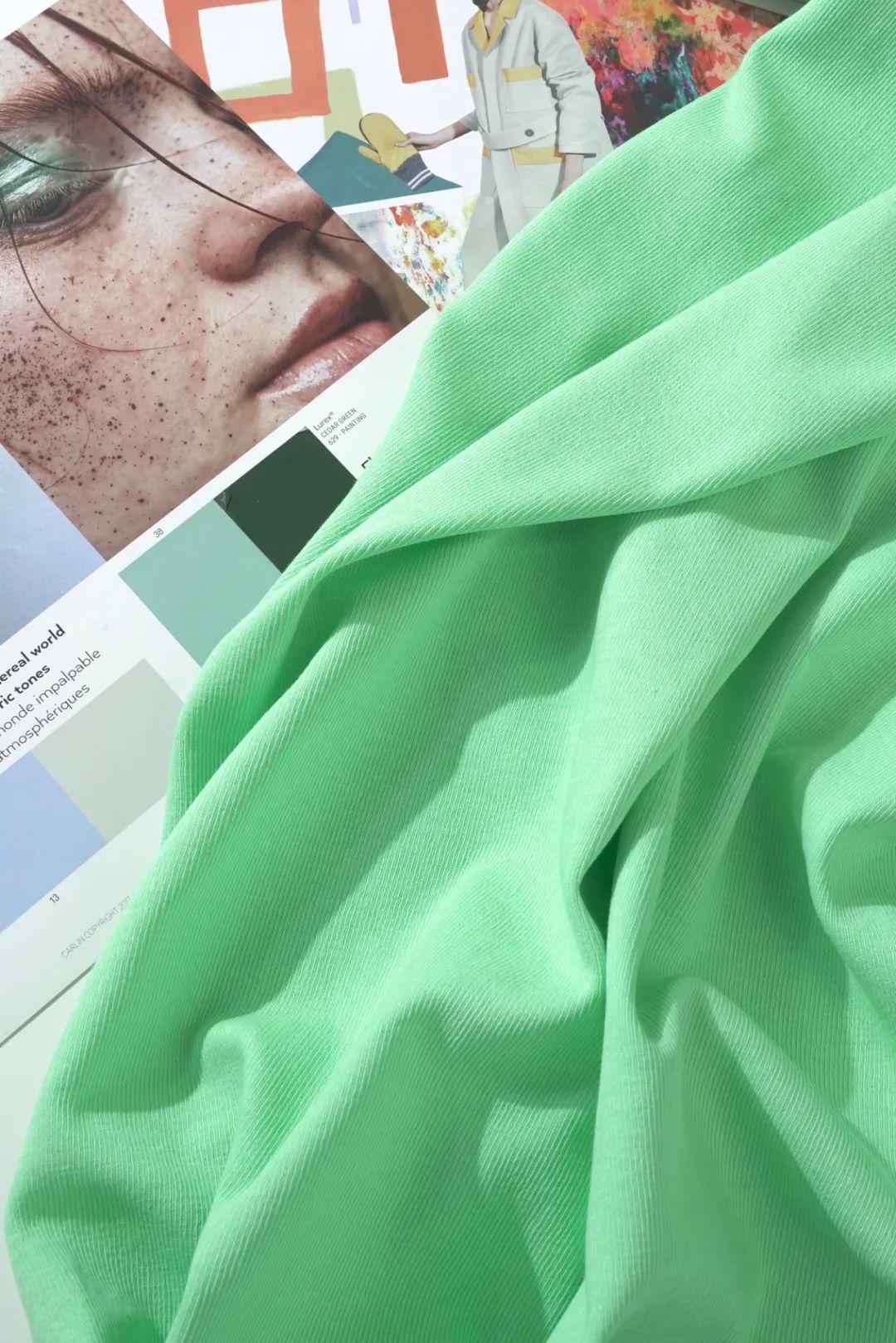
Can be divided into:
1. Cotton (100 % cotton)
2. CVC (cotton-polyester, containing more than 60% cotton)
3. TC/AB (containing about 30% cotton)
4. Full polyester (100% polyester)
If they are made of the above four ingredients, then these sweatshirts are not stretchy. Stretchy sweatshirts are made with spandex, that is, pure cotton, CVC, TC/AB, and pure polyester are basically made with spandex added (market name: stretch/densified). After adding this, the fabric of the sweatshirt becomes elastic. , the spandex component generally accounts for 5% of the entire cloth.

Sweatshirts/terry cloth/fish scale cloth with spandex added can be divided into
1. Cotton elastic stretch sweatshirt/terry cloth/fish scale cloth
2.CVC stretch stretch sweatshirt/terry cloth/fish scale cloth
3.TC/AB elastic Pull-up sweatshirt/terry cloth/fish scale cloth
4. Full polyester stretch pull-up sweatshirt/terry cloth/fish scale cloth

But Pilling on sweatshirts is a very frustrating issue. After all, when clothes pill, they will look cheap and downgraded. And wearing it can also cause a bad mood.
I believe we have encountered this situation in our daily lives.

Why do clothes pill?
There are three main reasons for fabric pilling:
1. Due to the characteristics of the fabric ball.
Different fabrics have different pilling difficulties. Fiber properties have a great influence on fabric pilling, such as fiber length and fineness. , and morphology and surface properties also have a greater relationship with fabric pilling. In contrast, fine fibers are easier to pill than coarse fibers, and blended fibers are easier to pill than other fibers.
2. Friction and electrostatic pilling.
Some chemical fibers have poor hygroscopicity and are prone to generate static electricity during drying and continuous friction. Static electricity causes the hairiness on the surface of short fiber fabrics to stand up, thus causing fluffing. The ball created the conditions. For example, the static electricity of polyester can easily attract foreign particles and cause pilling.
3. Improper pilling during washing.
Washing for too long can easily cause fabric fiber damage, fiber breakage, and increase the possibility of pilling; the washing temperature is too high (suitable temperature is 20 to 45 degree), incorrect detergent (it is recommended to use neutral detergent), etc. may cause pilling.

The necessary condition for pilling is that the fiber must have enough strength to support pilling. Cotton and fine wool will break and fall off during the pilling stage. , there is little chance of pilling. The situation is different for chemical fibers. Polyester or acrylic are very stubborn. They will fluff first, then pill, and then you have to cut off the pills. Pilling of clothes is affected by the characteristics of the fabric and cannot be avoided, but the degree can be controlled. Thin fibers are smaller than thick fibersIt is easy to pill. Blended fibers are easier to pill than other fibers. For example, clothes made of a blend of chemical fiber and cotton fiber are easier to pill than a piece of pure cotton clothes.
Solution
The fundamental solution is to buy sweatshirt fabrics , Choose clothes that are not prone to pilling, such as clothes made of natural fiber fabrics, such as pure cotton, silk, cashmere, etc. Pure natural wool is the best, but it will be more expensive and has higher warmth and softness.
Pure cotton sweatshirts feel better, look better in texture, are comfortable to wear, are very soft, and are also very sweat-absorbent.


These sweatshirt cleaning and maintenance tips
Also remember to remind customers~
Ordinary cleaning:
The washing water temperature should not be higher than 25 degrees. It is best to wash with cold water and must be washed by hand. Try to use neutral detergent for cleaning. If you find it difficult to remove residues of detergent, you can put some vinegar in the water, so that you can easily remove stains. When washing, do not scrub the collar and cuffs too vigorously to avoid deformation of the collar and cuffs.
Print cleaning:
Print items should not be soaked in water for too long. Do not rub the outside of the sweatshirt pattern with your hands. Do not use When washing with a detergent that contains bleach, try to use a more neutral detergent for cleaning. All printed items should not be washed in a washing machine as much as possible. It is recommended to wash them by hand. If the printed pattern on the clothing is stained, please soak it in washing powder and water for a few minutes, and then clean it with a brush (soft-bristled brush is best). It is not advisable to brush hard to avoid damaging the fabric fibers and affecting the brilliance of the printed pattern. Printed objects cannot come into contact with solvents, acids, alkali, oil and other corrosive substances.
Drying methods:
1. After washing, the clothes should be dried naturally, just squeeze the water gently with your hands. . Do not wring it with your hands, do not spin it in a clothes dryer, and printed items should not be bleached or dried.
2. If the clothes need to be ironed, use medium-temperature steam to iron them after drying, and try to avoid the pattern part with the iron. If the pattern needs to be ironed, the temperature of the iron should not be higher than 80 degrees. Please do not place the iron directly on the pattern. It is best to block a piece of cloth in the middle before ironing.
Storage skills:
1. When putting away clothes after washing, do not stuff the clothes into a narrow space. You can hang them on hangers or Spread flat to keep the garments flat.
2. It is best to hang the clothes on hangers in the wardrobe, or fold the clothes and put them in the cabinet.