
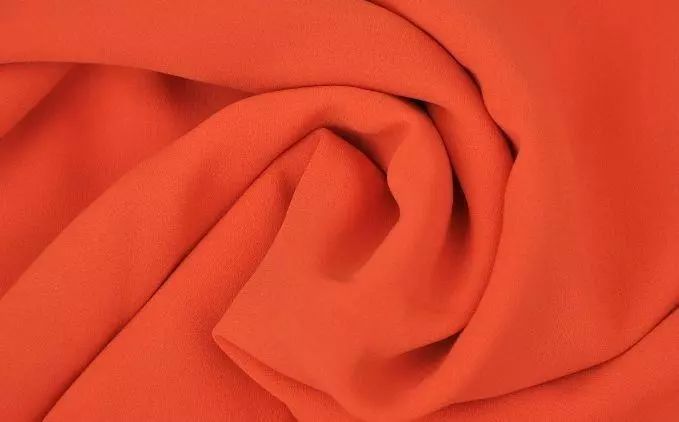
Polyester is an important variety of synthetic fibers and the trade name of polyester fiber in my country. It is a fiber-forming polymer made from purified terephthalic acid (PTA) or dimethyl terephthalate (DMT) and ethylene glycol (MEG) through esterification or transesterification and polycondensation reaction – Polyethylene terephthalate (PET), a fiber made by spinning and post-processing.
Molecular structural formula, as shown in the figure:
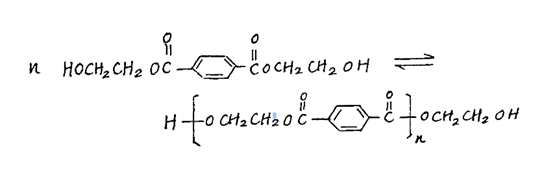
From the molecular composition of polyester, it is composed of short aliphatic hydrocarbon chains, ester groups, It is composed of benzene ring and terminal alcohol hydroxyl group. Except for the two terminal alcohol hydroxyl groups in polyester, there are no other polar groups, so the hydrophilicity of polyester fiber is extremely poor. The polyester molecule contains about 46% ester groups. The ester groups can undergo hydrolysis and thermal cracking above 200℃. When encountering strong alkali, they will be saponified, reducing the degree of polymerization. Commonly used detergents and washing powders below 100℃ have no effect on polyester. Influence.
Characteristics of polyester: High strength, good elasticity, heat resistance, insulation, abrasion resistance, and corrosion resistance are relatively good, but dyeability and moisture absorption They are all relatively poor, but have good color fastness and are not easy to fade. Because there are no specific dyeing groups on the polyester molecular chain and the polarity is small, it is difficult to dye and has poor dyeability. It is difficult for dye molecules to enter the fiber. It feels stuffy when worn, and is easily charged with static electricity and contaminated with dust, which affects the performance of the fiber. Aesthetics and comfort. However, it dries very easily after washing, has almost no drop in wet strength, does not deform, and has good washable and wearable properties.
There are many types of polyester fiber fabrics. In addition to pure polyester fabrics, there are also many products blended or interwoven with various textile fibers, which make up for the shortcomings of pure polyester fabrics and provide better performance. Taking performance. Polyester fabrics are developing in the direction of natural synthetic fibers such as wool-like, silk-like, linen-like, and deerskin-like fabrics.
Advantages of polyester-cotton blends
Comparative effects of polyester-cotton blended fabrics and pure cotton fabrics: strength and elongation (polyester-cotton blended > pure cotton) ; Wear resistance (polyester-cotton blended > pure cotton); pilling (polyester-cotton blended pure cotton); moisture permeability (polyester-cotton blended pure cotton); breathability (polyester-cotton blended > pure cotton); Blended>Pure cotton).
Polyester-cotton” and “cotton-polyester”, changing the order of the two words, become two different fabrics.
” “Polyester-cotton” (TC) fabric means that the polyester content accounts for more than 50% and the cotton content is less than 50%;
Advantages: Glossier than pure cotton fabric Bright, smooth and crisp to the touch, not easy to wrinkle, and the higher the polyester content, the less likely the fabric is to wrinkle.
Disadvantages:It is not as skin-friendly as cotton and is difficult to wear when wearing Not as comfortable as cotton fabrics.
“Cotton-polyester” (CVC) is just the opposite. It means that the composition of cotton is more than 50% and the composition of polyester is less than 50%. It is also called CVC variety.
Advantages: The luster is slightly brighter than pure cotton cloth, the cloth surface is smooth, clean and free of yarn or impurities. It feels smooth and crisp, and is more wrinkle-resistant than pure cotton cloth .
Disadvantages:It is not as skin-friendly as cotton and is not as comfortable to wear as cotton fabrics.
Advantages of polyester and linen blends
In the past, linen textiles had high yarn density and could only be used to weave medium and low-end products. They were only suitable for outerwear, decorative fabrics, etc., and did not reflect the unique properties of linen textiles such as good moisture absorption and release, coolness, etc. Advantages. Polyester fiber and flax fiber are now blended to produce high-end linen series blended products suitable for summer inner and outerwear. What are the characteristics of polyester and linen blended fabrics?
1. Cool to the touch
The flax fiber blending ratio is 35%-40%, and the flax fiber coverage rate of the yarn appearance is high. Therefore, when the human skin contacts the polyester/linen low-tech yarn fabric, the heat on the human body surface will It is quickly dissipated, giving people a cool feeling.
2. The fabric is light and thin, and the dyeing is bright
The yarn is fine, generally below 20tex ( 50 or more), can be used alone or interwoven with pure or blended yarns of other textile fibers to form ultra-thin fabrics. This product is of high grade, dyed and printed with bright, beautiful and gorgeous colors. The fabric is famous for being cool, transparent, thin and cool. .
3. Good wrinkle resistance
Due to the fiber characteristics, polyester can be used to improve the wrinkle and dyeing resistance of linen fiber fabrics. The shortcomings of not being brightly colored can be improved by utilizing the advantages of flax fiber’s good moisture absorption and moisture release properties to improve the shortcomings of polyester fabrics such as poor moisture absorption and uncomfortable wearing.
4. Comfortable to wear and good washability
Polyester and linen yarn and fabric blendsThe proportion is moderate, the fabric feels soft, easy to wash, easy to dry, has good plastic shape, and does not deform after washing. It has the same moisture absorption, moisture release, and breathability as pure linen fabric. It is a non-stick high-end summer inner and outer fabric.
Advantages of polyester and cashmere blends
The ratio of wool: polyester = 45:55 can not only maintain the advantages of wool, but also bring into play the advantages of polyester. Almost all coarse and worsted wool fabrics have corresponding wool-polyester blended varieties. Among them, worsted wool-polyester thin tweed, also known as cool tweed, is commonly known as Mao Qianliang (Note: Qianliang is the common name for polyester). It is one of the fabrics that best reflects the characteristics of wool-polyester blends.
Compared with all-wool tweed, wool-polyester thin tweed has a light texture, good wrinkle recovery, strong wear resistance, easy to wash and quick-dry, long-lasting pleats, stable size, and not easy to be eaten by insects, but its feel is not as good as that of full-wool tweed. The hair is soft. If glossy polyester is used as the raw material for blending, the surface will have a silky luster. If cashmere or camel hair and other animal hairs are used in the blended raw material, the hand feel will be smoother.
Washing instructions: Soak in cold water for 15 minutes, then wash with general synthetic detergent. The temperature of the washing liquid should not exceed 45 degrees Celsius. Dirty areas such as collars and cuffs can be scrubbed with a soft brush. After cleaning, you can gently wring it out and place it in a cool and ventilated place to dry. Do not expose it to the sun or dry it to avoid wrinkles due to overcooking.
Advantages of TR fabrics
Polyester-viscose blend is a highly complementary blend. Polyester and viscose are not only available in cotton and wool types, but also in mid-length types. Wool type fabric is commonly known as “fast bus”. When polyester is not less than 50%, this blended fabric can maintain the characteristics of polyester that are strong, wrinkle-resistant, dimensionally stable, and washable and wearable. The mixing of viscose fiber improves the air permeability of the fabric and improves the resistance to melt holes; it also reduces the pilling and antistatic phenomena of the fabric.
The ratio of polyester/viscose blends is usually 65/35 or 67/33. The characteristics of this type of blended fabrics are smooth and smooth fabrics, bright colors, strong wool texture, good elasticity and good hygroscopicity; but The ironing resistance is poor.
Advantages of TR fabric:
① High strength, short fiber strength is 2.6~5.7Cn/dtex, high strength The fiber is 5.6~8.0Cn/dtex. Due to its low hygroscopicity, its wet strength is basically the same as its dry strength. The impact strength is 4 times higher than nylon and 20 times higher than viscose fiber.
② Good elasticity, the elasticity is close to wool. When stretched by 5% to 6%, it can almost completely recover, and its wrinkle resistance exceeds other fibers, that is, the fabric does not wrinkle, and the size It has good stability and its elastic modulus is 22~141cN/dtex, which is 2~3 times higher than nylon.
③ Good water absorption.
④ Good wear resistance, the wear resistance is second only to nylon with the best wear resistance, and better than other natural fibers and synthetic fibers.
⑤ Good light resistance, the light resistance is second only to acrylic fiber.
⑥ Corrosion resistance, resistant to bleach, oxidants, alcohols, ketones, petroleum products and inorganic acids, resistant to dilute alkali and not afraid of mold, but hot alkali can cause it to decompose .
Conclusion
The advantage of blended fabrics is that through the organic combination of two or more different types of fibers, they can complement each other’s strengths and coexist with their advantages to meet people’s needs for clothing. of different requirements. Blended fabrics will combine the advantages of two or more raw materials and complement each other to achieve better performance and comfort of the fabric, and also greatly reduce the cost of the product. Through the introduction of polyester and polyester blended fabrics, everyone must have a better understanding of polyester and get to know polyester.