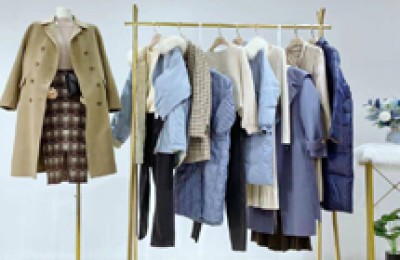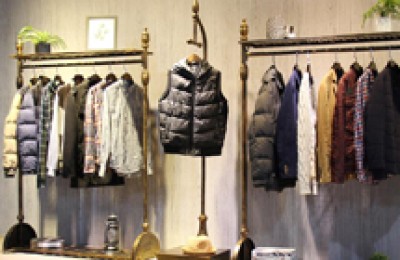

When shopping, I often see clothing descriptions that say 200 grams, 240 grams, and 300 grams. What does that mean? What do 30-count yarn and 40-count yarn mean?
What are the differences between clothes of different weights and yarn counts?
Do they have any impact on the quality of the clothes?

The measurement of gram weight generally refers to the weight of one square meter of fabric (g/㎡), not the weight of an entire piece of clothing.
Generally used to indicate the thickness of the fabric. The greater the weight, the thicker the clothes and the more upright the body will be when worn. Fabrics with higher grammage are more expensive; fabrics with lower grammage are cheaper. So winter clothes are generally more expensive than summer clothes.
Some clothes modify the figure and make people look energetic; but some clothes are soft and floppy, which not only does not modify the figure but also magnifies shortcomings because the weight of the clothes is too low , the clothes can only stick to the skin, and the pattern cannot hold up.
The weight of pure cotton T-shirts is generally between 160 grams and 220 grams. If it is too thin, it will be easy to see through and collapse. If it is thick, it will stand up but will be stuffy.
The weight of sweatshirts is generally between 200-480 grams, with light ones suitable for early autumn and heavy ones suitable for winter.
Clothes with high weight not only look good and tall, can be worn inside or outside, suitable for all ages, but are also more wear-resistant, washable and durable.
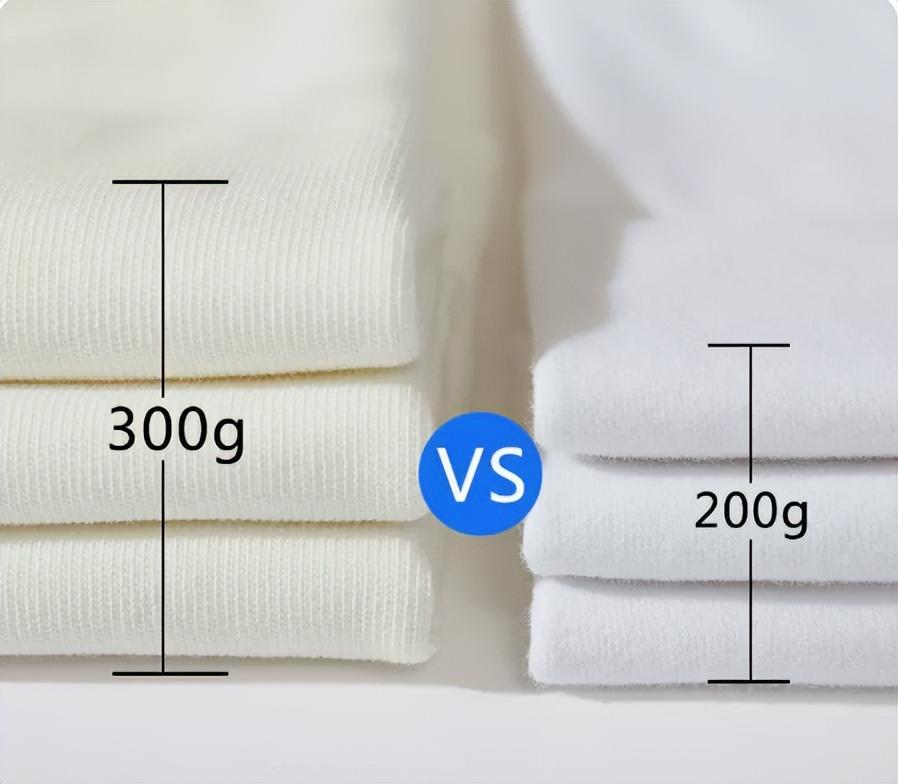
Comparison of different gram weights

The count is the thickness specification of the yarn, such as one pound of cotton. 30 pieces of yarn with a length of 1 meter, that is 30 pieces; one pound of cotton is made into 40 pieces of yarn with a length of 1 meter, that is 40 pieces.
According to this principle, the higher the yarn count of the entire gauze, the finer the yarn, the thinner the woven cloth, and the softer the gauze feels. Comfortable. Moreover, gauze with a higher count requires higher cotton quality. The higher the count, the higher the requirements for yarn mills and weaving factories, and the higher the cost of gauze.
1. Thick count yarn: pure cotton yarn with 18 counts and below, mainly used for weaving thick fabrics or pile and loop cotton fabrics.
2. Medium count yarn: 19-29 count pure cotton yarn. Mainly used for knitted garments with general requirements. T-shirts are generally 21 and 32 count.
3. Fine count yarn: 30-60 count pure cotton yarn. Mainly used for high-grade knitted cotton fabrics.

The experience of wearing clothes made of different fabrics is also very different:
Pure cotton
Features: soft and warm; excellent hygroscopicity and breathability; not prone to static electricity; easy to wrinkle; easy to deform.
Sparse cotton
Features: smooth texture; good hygroscopicity; durable and washable; not prone to pilling; Not easy to shrink and deform. The production process cost of combed cotton is relatively high, so the price is generally higher than that of pure cotton clothes.
Mercerized cotton
Features: silky feel; bright color; good drape; not easy to wrinkle and pill ; The process is cumbersome and the cost is slightly higher.
Polyester
Features: strong and durable; good shape retention; wrinkle-resistant and iron-free; breathable and hygroscopic Poor; prone to static electricity; prone to pilling.
Odell
Features: delicate and skin-friendly feel; light and smooth texture; anti-wrinkle, no need to iron; easy to wash Dry; not easy to fade.
Lycra
Features: extremely elastic and not easily deformed; moisture absorbent and quick drying; smooth to the touch; good heat resistance .
Hemp
Features: Good moisture absorption and breathability. Because of the biological structure and characteristics of hemp, it can double inhibit bacteria, and Naturally healthy, anti-static.
After understanding the weight, count and fabric, we can choose clothes that meet our needs and requirements based on the environment, weather, temperature and occasion.
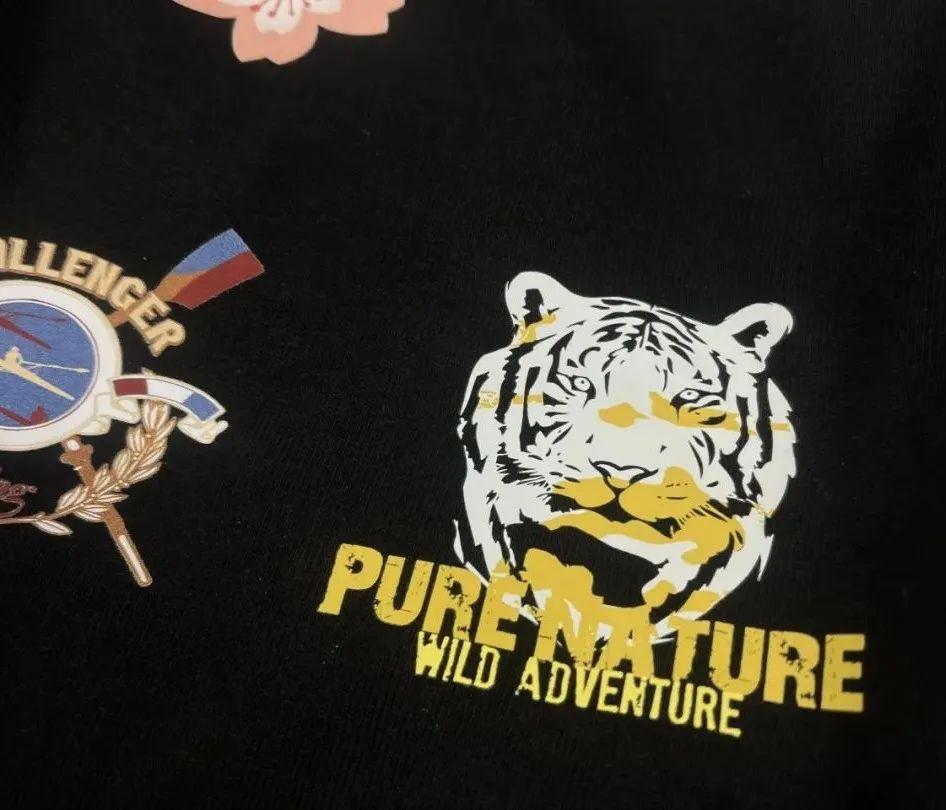
In addition to the fabric, weight, and count of the clothes themselves, the quality of the decorative patterns of the clothes is also one of the important factors that affect the quality of the clothes. (Public account: Shanmu Wusenbiao)
Most of the clothes on the market are printed and heat transfer.
Printing uses special ink to print patterns directly on the T-shirt, and then puts it into infrared drying equipment to dry. During this process, the ink particles melt and mix with the T-shirt. The fibers are firmly bonded and cooled into shape.
Heat stamping is to first print the pattern on the heat transfer paper. If necessary, then cover the heat transfer paper on the T-shirt and put it into the heat transfer paper. The machine (heat press machine) heats and pressurizes for a few seconds, and the pattern is transferred to the T-shirt.
The above mentioned the quality of decorative patternsIt is also one of the important factors affecting the quality of clothes. The reason is that the bottom garment will be affected by cracking, falling off, and fading of the pattern, and the pattern will become ugly, making the owner of the garment feel that the quality of the garment is really good, and at the same time he is unwilling to wear the garment again, and will no longer buy it in the same store. clothing.
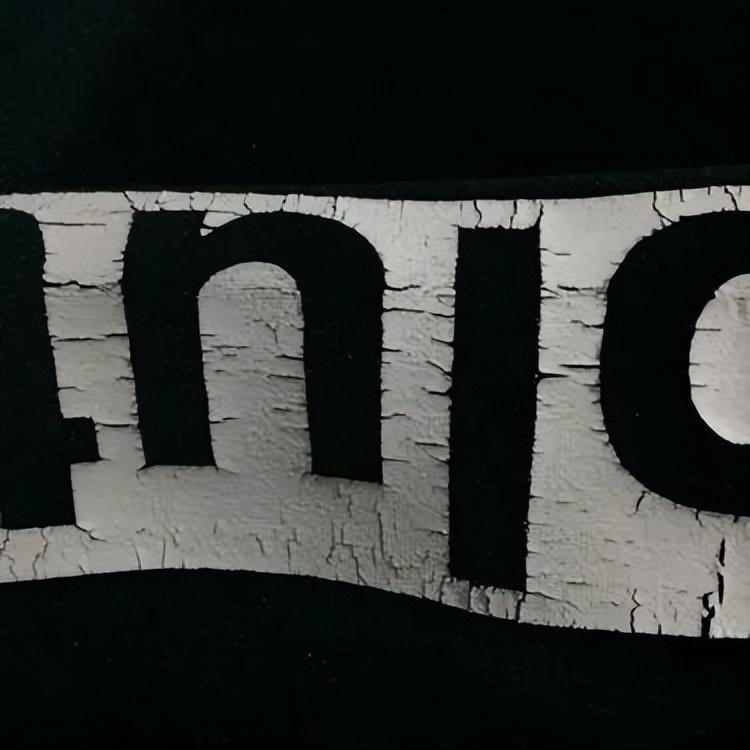
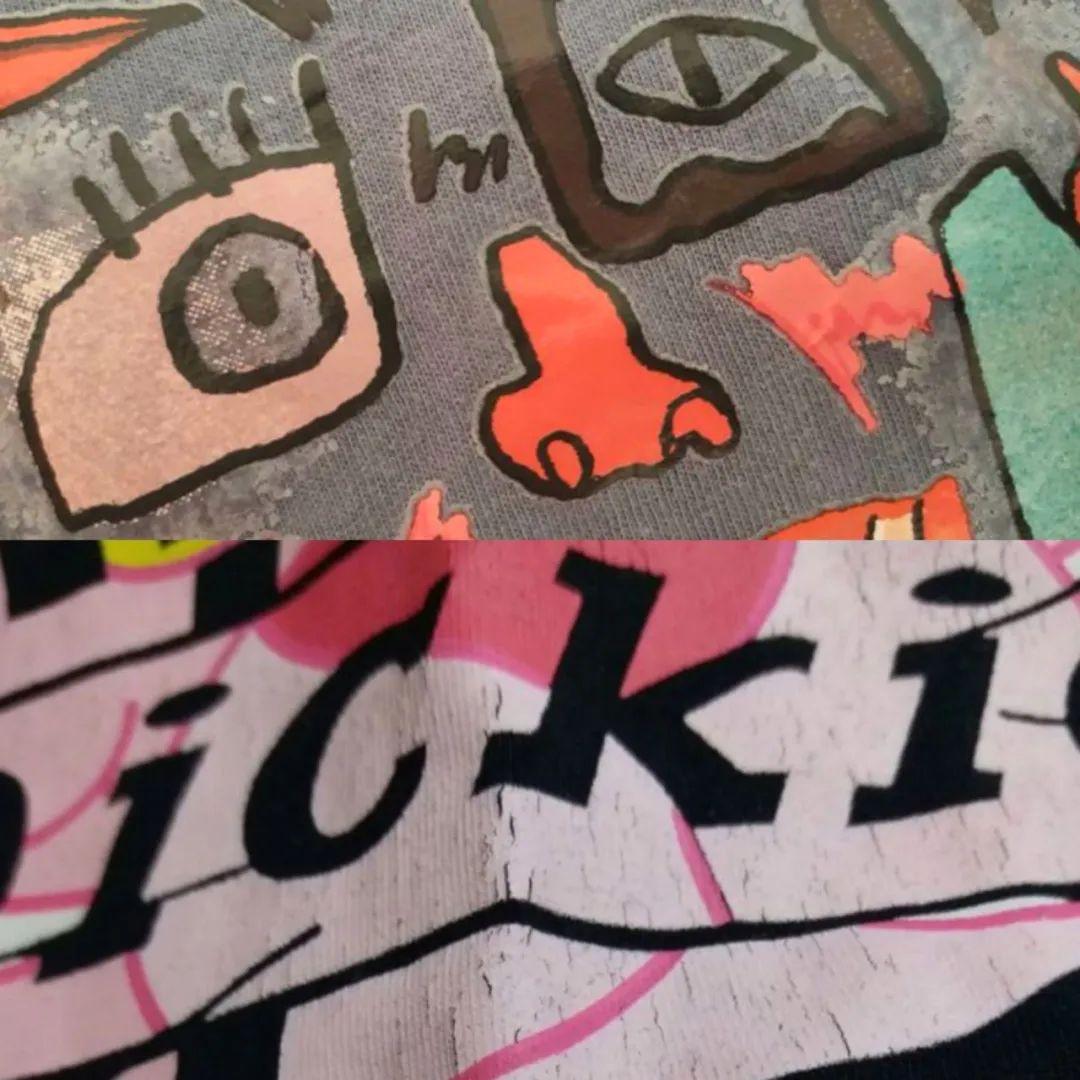
Crack
So I chose to do the printing and heat transfer process When wearing clothes, we must keep our eyes open to feel whether the decorative pattern is thin and brittle. When we put it on, we obviously feel that the pattern is stuffy. If so, it is very likely that the quality of the heat transfer pattern on this dress is average.
Standard heat transfer must be made of imported polyurethane material. It will not become brittle or hard at minus 30 degrees Celsius, and will not re-stick at minus 60 degrees Celsius. It must go through an American standard washing machine. The water washing test must be washed more than 20 times, and it must pass the German Oeko-Tex before leaving the factory.
Standard
100 certification and SGS inspection. Although non-standard heat transfer has average weather resistance, it is the most cost-effective. The inspection standard must also be tested by a household water washing machine more than 10 times. It can only leave the factory after reaching the standard.
Excellent printing and heat transfer technology has the advantages of water resistance, high temperature resistance and strong weather resistance. The pattern has no glue edges, and there will be no cracks or scum when pulled hard. Clothes with rich colors and not easy to fade are high-quality clothes.