

Sweatshirts are an indispensable item for autumn and winter. However, if the sweatshirts are not properly cared for, such as using hangers to hang clothes improperly, the sweatshirts will easily deform. So how can you use hangers to dry sweatshirts without deformation? In order to avoid having to wear a hooded sweatshirt on the shoulder, let’s learn some tips and tricks on how to hang it.
Tip 1: Try to wring out the water from the sweatshirt or dehydrate it in the washing machine before drying the sweatshirt. If you wash the sweatshirt by hand without twisting it out, the sweatshirt will be very heavy, so it is easy to have indentations when the sweatshirt is cooled on the hanger. Therefore, try to twist it dry or use a washing machine to dry it in the last water, and the clothes will dry easily.
Tip 2: Change the hanger method for drying sweatshirts. Traditionally, sweatshirts are hung directly on hangers to dry. Due to the weight of the sweatshirt itself, it is easy to deform and appear general shoulders.
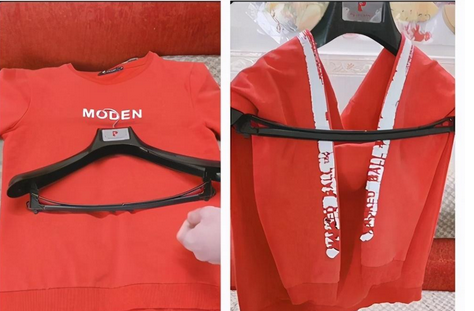
We can put a hanger in the middle of the sweatshirt, pass the two sleeves forward through the hanger, and then take it out to dry or hang it in the wardrobe on weekdays. This way, the sweatshirt will not deform when dried on a hanger!
3. How to hang the hooded sweatshirt. In addition to method two, you can also use an extra hanger to hang the sweatshirt. The specific method is to put an extra hanger behind the hat, and then use a clip to clamp the sweatshirt hat, so that the sweatshirt can dry easily and not deform.
Hooded sweatshirts are relatively thick
When the surface of the clothes is dry
The hat and the inside of the arms are still wet
When drying, it is best to clamp the hat and sleeves and spread them out
This way they can dry faster

How to remove mildew on clothes
On cloudy and rainy days, not only will the clothes not dry and stink, but what is even more tragic is that the clothes will also grow dense black mold spots.
The most common way to remove mildew is to soak moldy clothes in rice water overnight to allow the protein in the rice water to absorb the mold. By the next day, the color of the rice water had become darker, indicating that a lot of mold spots had been removed.
For areas where mildew is still stubborn, you can apply some 5% alcohol solution, or rub it with hot soapy water several times, scrubbing it back and forth, and you can basically say goodbye to the mildew.
In addition, there are different mildew removal methods for clothes made of different materials:
Cotton clothes: You can use a few mung bean sprouts to remove mildew spots. Rub the affected area repeatedly, then rinse it with clean water, and the mildew spots will be removed.
Silk clothes: First soak the silk in water and scrub with a brush. If there are many mildew spots and are heavy, you can apply some 5% alcohol on the moldy areas. solution and scrub several times.
Synthetic fiber clothes: Use a towel dipped in some strong soapy water to scrub, and then rinse with warm water.