
When you shop online, you often hear the names Juan silk, Tencel, rayon, and milk silk. So what exactly are these silks? What are the real ingredients? Let’s talk about it here today.
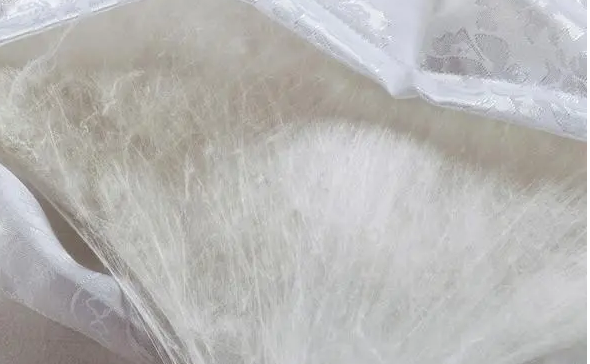
Before talking about these silks, let’s talk about real silk first. As I told you before, real silk, we generally refer to the silk spun out by silkworms, which is animal protein. According to the different foods that silkworms eat, they are divided into mulberry silk, tussah silk, castor silk, etc. Among them, mulberry silk is the most popular because of its white color, long fiber and good toughness. In a word, real silk refers to raw silk that is produced by silkworm babies, spins cocoons, and is artificially reeled.
Let’s talk about Juansi first. Juansi is not strictly speaking real silk. Juan silk is a spinning process that processes defective cocoons and waste silk produced in silkworm rearing, silk making, and silk weaving into yarn. Although the raw material of juan silk is also spit out by silkworm babies, it is not a product obtained by directly reeling silkworm cocoons. So it cannot be counted as real silk. The biggest disadvantage between juan silk and real silk is that the fiber of juan silk is short, and the clothes made of it are prone to lint after a long time.
Tencel, Tencel is a brand name, its real name is Lyocell. This trademark now belongs to Austrian Lenzing Company, which means that only Lyocell produced by Lenzing Company can be called Tencel, and Lyocell produced by other companies can only be called Lyocell. But because the Lyocell (Tencel) produced by Lenzing is so famous, everyone now calls Lyocell and Tencel. Tencel is an industrial textile made from coniferous wood. The raw material is natural but requires chemical treatment. The advantage is that it has the breathability of cotton and the feel and luster of silk; the disadvantage is that it is not resistant to friction. After friction, the surface will have lint, and in severe cases, it may even form pills.
Rayon is actually artificial silk fiber, which has the luster, silkiness and drape of real silk. Rayon can be chemical fiber or plant fiber. There are two important members of the human silk family, which uses plant cellulose as its main raw material: acetate silk and cupro silk. Whether it is chemical or cellulose rayon, the biggest advantage over real silk is that it is durable and easy to take care of. The biggest disadvantage is that it is not as breathable, light and elegant as real silk.
Milk silk, to be honest, Sister Mao Zhi has never seen real milk silk, so she checked it on Baidu. Milk silk is made by adding a softener to milk protein to make a milk slurry, and then through wet spinning technology and scientific treatment, it is spun into milk protein fiber, and further spun into milk silk that can be woven. This is the explanation of Baidu entry. In any case, it remains true that it is not a natural fiber.
Common natural fibers in textile fabrics include cashmere, wool, mulberry silk, cotton, and linen; they are natural raw materials, but they need to undergo a series of chemical processing. The fibers include: Tencel, acetic acid, cupro, and milk; the rest are mostly chemical products. Nowadays, some chemical products are made of rayon very well, with various properties even better than real silk, and the fabrics are also very expensive. Generally speaking, in terms of price, the above three raw materials decrease in order.
Okay, what other threads have you encountered in your life? You are welcome to leave a message in the comment area, and let’s discuss their advantages and disadvantages together.