
Line fabric is a common fabric in today’s life, just like some of the current clothing. Today, the editor will introduce to you the linen fabric.
Line fabric refers to pure hemp fiber fabrics and their blends or interwoven fabrics. The following introduces the characteristics of linen fabrics:
1. Linen fiber is a cellulose fiber, and its fabric has properties similar to cotton.
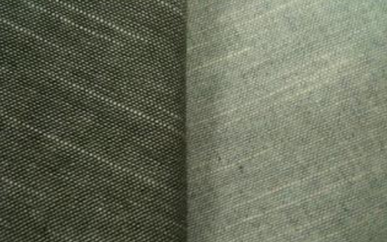
2. Linen fabric has the characteristics of high strength, good hygroscopicity and strong thermal conductivity, especially the strength ranks first among natural fibers.
3. Linen has good dyeing performance, bright color and not easy to fade.
4. It is not very sensitive to alkali and acid. Mercerization can occur in caustic soda, which enhances the strength and gloss; it basically does not change after a short time in dilute acid. Of course, strong acids can still harm it.
5. It has good mold resistance and is not susceptible to moisture and mildew.
Line fabrics can be divided into two types: pure linen fabrics and linen blended and interwoven fabrics.
Pure linen fabric
1. Ramie fabric Ramie fabric is a fabric woven from ramie fiber, which is divided into two categories: handmade and machine-woven. Handmade ramie cloth is commonly known as linen cloth. Because of its uneven quality, it is often used as a material for mosquito nets, linen linings, and interlinings. The quality and appearance of woven ramie cloth are superior to handmade linen cloth. The cloth surface is tight and flat, even and smooth, and durable. After bleaching or dyeing, it can be made into various garments. Ramie clothing is comfortable to wear and breathable, making it an ideal summer fabric.
1. Linen fabric Linen fabric is processed from flax fiber and is divided into two types: original color and bleached. Original color linen has not been bleached or dyed, and has the natural color of linen fiber. Bleached linen has been bleached and mercerized, making it softer, smoother, whiter and more elastic than original color cloth. Linen has become the fabric of all kinds of summer clothing, such as outerwear, shirts, curtains, sofa cloths, etc., because of its fine and smooth surface, soft and elastic feel, coolness and comfort, and non-stickiness against sweating.
Line blended and interwoven fabrics
1. Linen and cotton blended interwoven fabrics. Linen and cotton blended fabrics are generally made with a ratio of 55% linen and 45% cotton or 50% linen and 50% cotton. Blended. In appearance, it maintains the unique rough and crisp style of linen fabrics, and has the soft characteristics of cotton fabrics, which improves the shortcomings of linen fabrics that are not clean enough and easy to fluff. Cotton and linen interwoven fabrics are mostly interwoven with cotton as warp and linen as weft. The texture is firm and smooth, and the hand feel is softer than pure linen. Linen-cotton blended fabrics are mostly light and thin, suitable for summer clothing.
2. Wool and linen blended fabrics are various fabrics woven with different proportions of wool and linen blended yarns, including wool and linen herringbone and various wool and linen tweeds. Wool and linen blended fabric has the characteristics of smooth feel, crispness and good elasticity, and is suitable for making young men and women’s clothing, suits, skirts, vests, etc.
3. Silk and linen blended fabrics Silk and linen sand-washed fabrics are new products developed using sand-washing technology in recent years. It combines the excellent characteristics of silk fabrics and linen fabrics, and at the same time overcomes the weakness of reduced strength of sand-washed silk fabrics, producing a refreshing and elastic feel. This fabric is suitable for making summer clothing.
The above is the editor’s introduction to linen fabrics. I believe everyone will understand it. High-quality linen fabrics are all available on the cloth network.