
Modal and rayon are both regenerated fibers, but modal’s raw material is wood pulp, while rayon’s raw material is natural fiber. From a certain perspective, both fibers are Green fiber. In terms of feel and style, the two are extremely similar, but their prices are very different
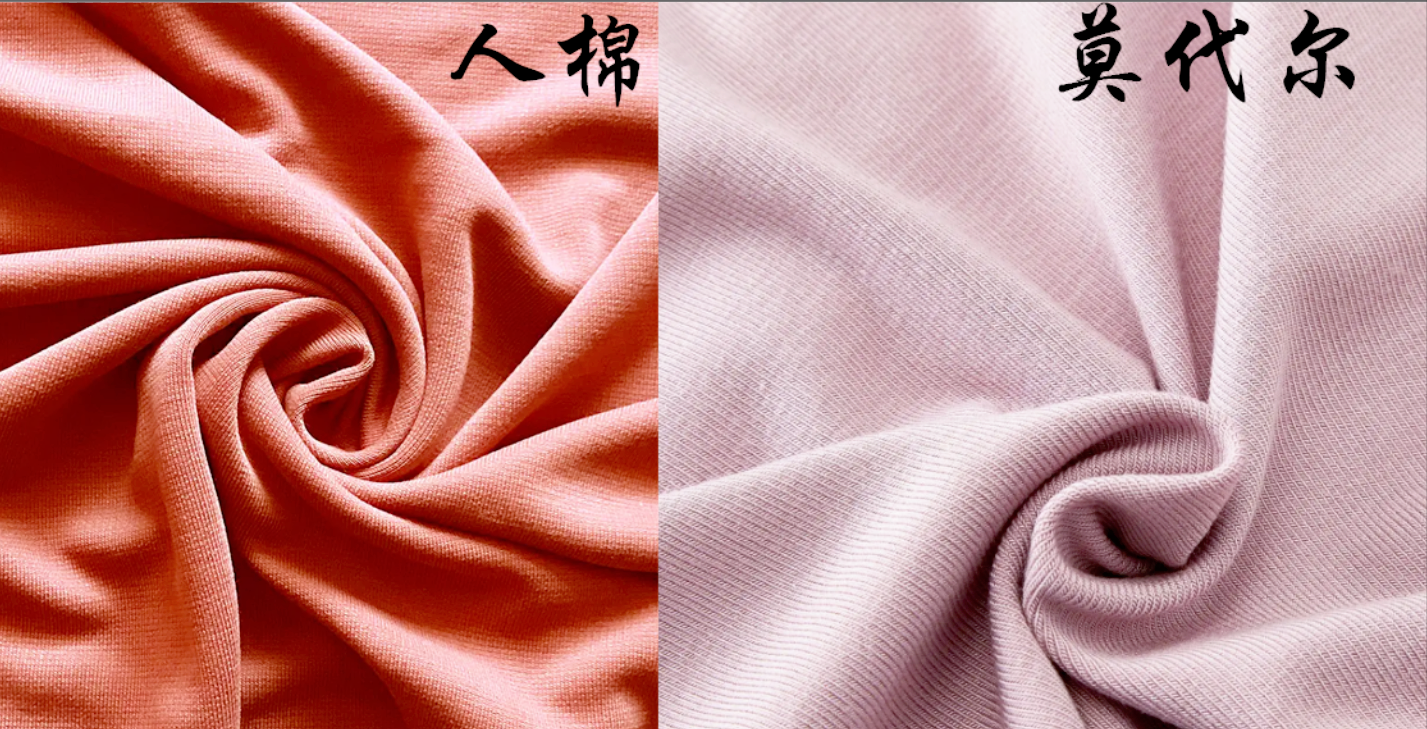
Modal
Modal fiber is a new fabric that has emerged in recent years. It is also called Modal, or Modal for short. It is a modern fiber that combines the luxurious texture of natural fibers with the practicality of synthetic fibers. It has the softness of cotton, the luster of silk, and the smoothness of linen. Its water absorption and breathability are better than cotton, and it has a higher Dye uptake rate, fabric color is bright and full. Modal fiber can be blended and interwoven with a variety of fibers, such as cotton, linen, silk, etc., to improve the quality of these fabrics, so that the fabrics can remain soft and smooth, giving full play to the characteristics of each fiber to achieve better wearing effects.
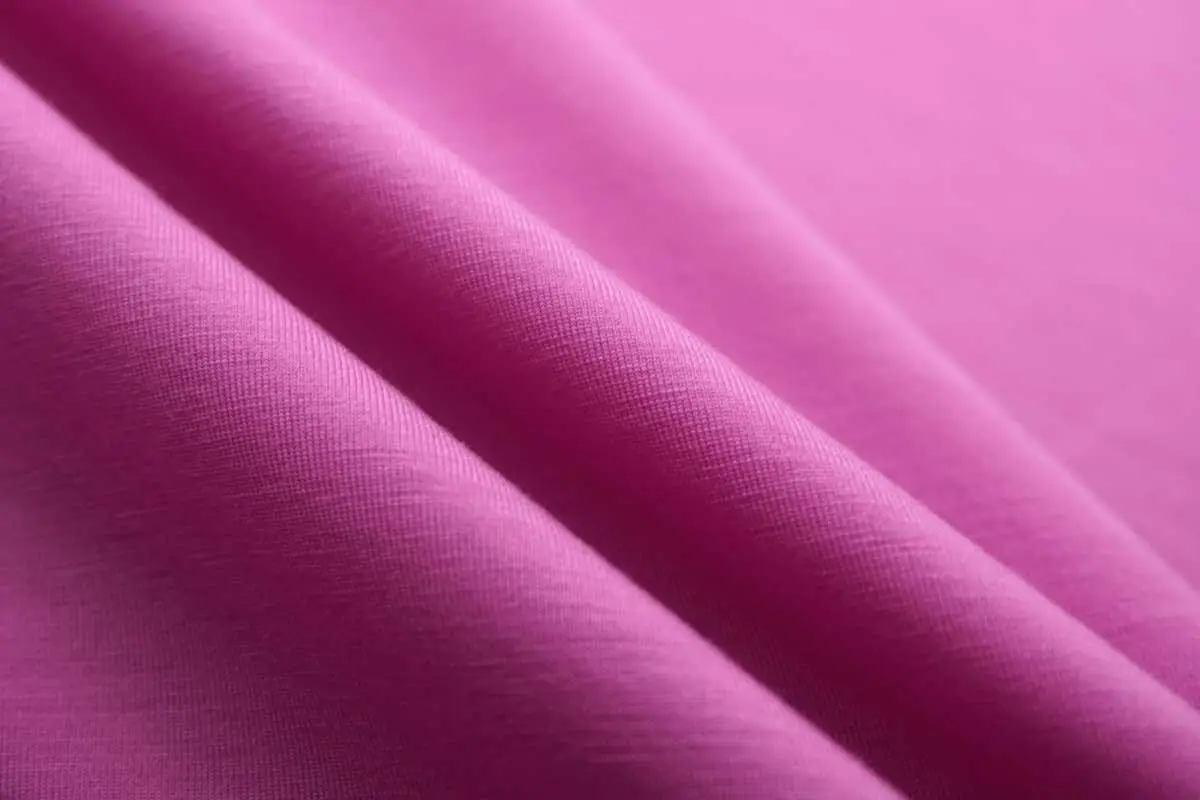
Rayon
Rayon is the common name for viscose fiber , abbreviation: rayon. Viscose fiber refers to α-cellulose extracted from cellulose raw materials such as wood and plant stalks, or man-made fiber made from cotton linters, processed into spinning solution, and then wet-spun. Simply put, rayon is a regenerated fiber.
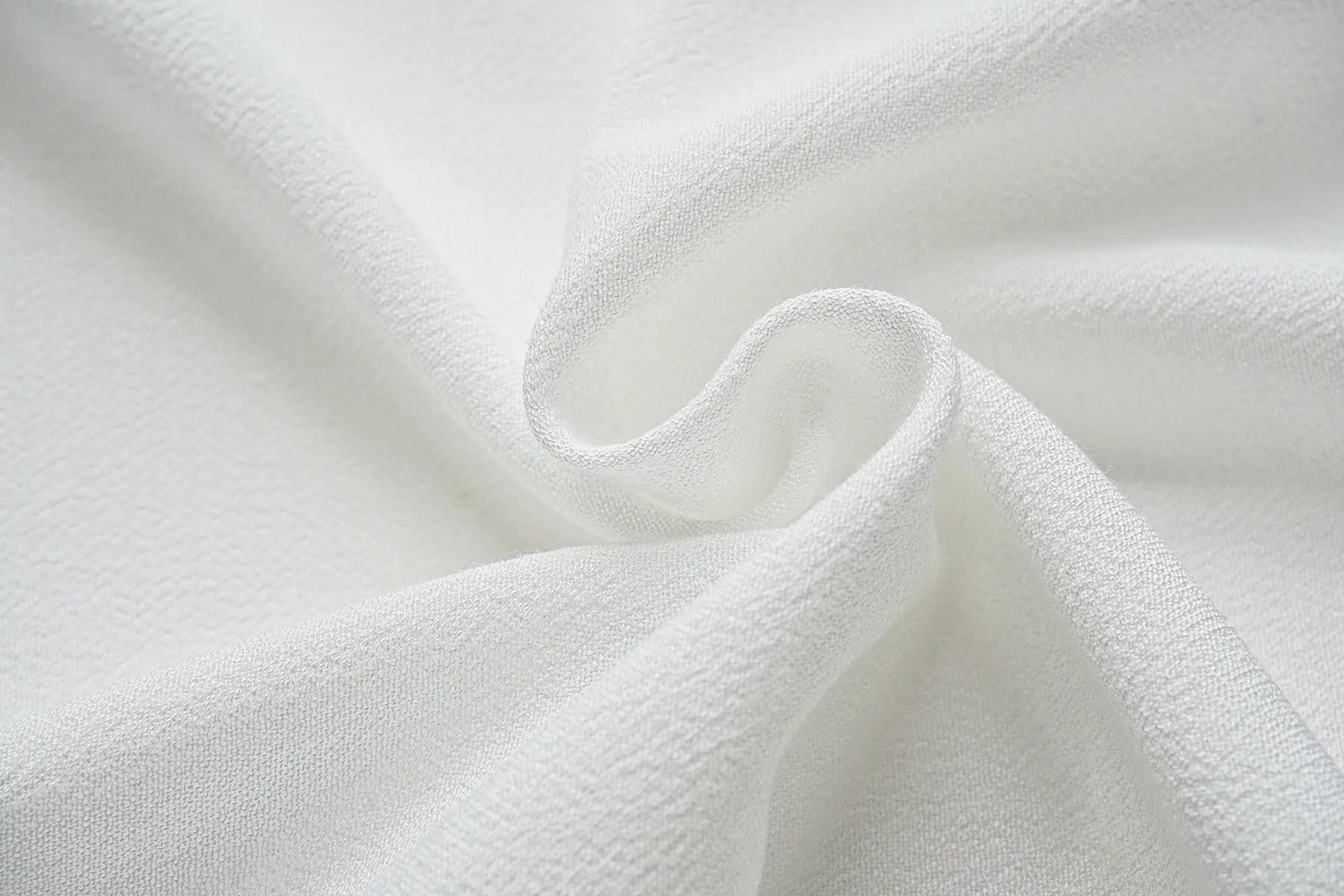
The difference between modal and rayon:
|
Rayon (viscose) |
Modal |
|
|
Ingredients |
Regenerated cellulose fiber |
|
|
Production method |
Glue method |
|
|
Stretch% |
18-20 |
12.0-14.0 |
|
Strength |
22.1-25.6 |
34-36 |
|
Wet strength |
9.7 -15 |
20-22 |
|
Water swelling Moisture (moisture absorption rate) |
90 |
63 |
|
Fiber polymerization |
250-300 |
350-450 |
|
Moisture regain rate % |
13 |
12.5 |
|
Advantages |
Good hygroscopicity,� Zehao |
Good hygroscopicity, Good gloss. The strength is higher than that of rayon, and the shrinkage rate is smaller than that of rayon. |
|
Disadvantages |
Low strength, even lower wet strength, large shrinkage |
Dry and wet strength are not as strong as Tencel |
Extension:

Modal is Austrian Lenzing
(Lenzing)
The company develops cellulose regenerated fiber with high wet modulus viscose fiber. The raw material of this fiber is European beech wood, which is first made into wood pulp and then processed into fiber through a special spinning process. The raw materials of this product are all natural materials, which are harmless to the human body, can be decomposed naturally, and are harmless to the environment. Modal fiber is made from wood slurry produced in European shrubs and then processed through a special spinning process. It is a cellulose fiber, so it is a cellulose fiber like cotton and is a pure natural fiber.
Modal products have good softness and excellent hygroscopicity, but their fabrics have poor stiffness. Now it is mostly used in the production of underwear. Modal knitted fabrics are mainly used to make underwear. However, modal has the characteristics of silvery luster, excellent dyeability and bright color after dyeing, which is enough to make it suitable for outerwear. Because of this, modal is increasingly becoming a material for outerwear and decorative fabrics. In order to improve the shortcomings of poor stiffness of pure modal products, modal can be blended with other fibers and achieve good results. JM/C (50/50) can make up for this shortcoming. Blended fabrics woven with this yarn make the cotton fibers more supple and improve the appearance of the fabric. Modal can also demonstrate its weavability during the weaving process of woven fabrics, and can also be interwoven with yarns of other fibers to weave into a variety of fabrics. Modal products have broad development prospects in modern clothing.
Rayon is viscose fiber, a major variety of man-made fiber. Natural cellulose is alkalized to form alkali cellulose, which reacts with carbon disulfide to form cellulose xanthate. The viscous solution obtained by dissolving it in dilute alkali is called viscose. The viscose is wet-spun and a series of After the treatment process, viscose fiber is obtained. Its basic component is cellulose
(C6H10O5)n oThe cross-section of ordinary viscose fiber has a zigzag-shaped skin-core structure, with straight longitudinal grooves and horizontal grooves. The rich fiber skin-core structure has a circular cross-section.
Viscose fiber has good hygroscopicity, and under normal atmospheric conditions, the moisture regain is about 13%. It expands significantly after absorbing moisture, and its diameter increases by up to 50%. Therefore, the fabric feels hard and has a large shrinkage rate after being soaked in water.
The breaking strength of ordinary viscose fiber is smaller than cotton, about 1.6~2.7cN/dtex; the breaking elongation is greater than cotton, 16%~22%; wet strength The decrease is large, about 50% of the dry strength, and the wet elongation increases by about 50%. Its modulus is lower than cotton, it is easy to deform under small loads, and its elastic recovery performance is poor, so the fabric is easy to stretch and has poor dimensional stability. The strength of rich fiber, especially the wet strength, is higher than that of ordinary viscose, the elongation at break is smaller, and the dimensional stability is good. Ordinary viscose has poor wear resistance, while rich fiber has improved it.
The chemical composition of viscose fiber is similar to that of cotton, so it is more resistant to alkali than acid. However, its alkali and acid resistance are worse than cotton. Rich fiber has good alkali resistance and acid resistance. Similarly, the dyeability of viscose fiber is similar to that of cotton, with a full dyeing spectrum and good dyeing performance. In addition, the thermal properties of viscose fiber are also similar to cotton, and the density is close to cotton at 1.50~1.52g/cm3.
Ordinary viscose fiber has good hygroscopicity, is easy to dye, is not prone to static electricity, and has good spinnability. Short fibers can be spun purely or blended with other textile fibers. The fabric is soft, smooth, breathable, comfortable to wear, has bright color and good color fastness after dyeing. Suitable for making underwear, outerwear and various decorative items. The filament fabric is light and thin, and in addition to being used as clothing material, it can also be used to weave quilts and decorative fabrics. The disadvantages of this type of viscose fiber are poor fastness, low wet modulus, high shrinkage and easy deformation, poor elasticity and wear resistance.
Summary:
Since rayon and modal are both regenerated fibers, electrostatic reactions are more likely to occur, and severe electrostatic addition Friction on the fabric will produce an open flame. In autumn and winter, the electrostatic reaction of the fabric will easily cause the fabric to fluff. Nowadays, more and more businesses are adding antistatic finishing to the fiber in the later stage. This can not only improve the wearing comfort of the fabric, but also prevent the fabric from pilling and improve the feel and beauty of the fabric. For example, ZJ-Z09H non-ionic antistatic agent can effectively improve the moisture absorption and conductivity of fabrics, as well as anti-fouling and dust-proof properties. It can also improve the fabric’s pilling resistance by more than 0.5 levels.
The material’s resistance to pilling is above level 0.5.