
When it comes to the classification of real silk fabrics, everyone may be confused. There are many varieties of real silk. Today I will introduce some common categories to you~
Real silk fabrics are compared to simulated silk fabrics. , generally refers to silk, including mulberry silk, tussah silk, castor silk, cassava silk, etc. According to the weight of the fabric per square meter, it is divided into thin, medium and thick types. According to different post-processing, it is divided into two types: dyeing and printing. Its texture is soft and smooth, soft and light to the touch, and its colors are rich and colorful. It is mainly used as shirts, pajamas, dress fabrics and bedding, etc.
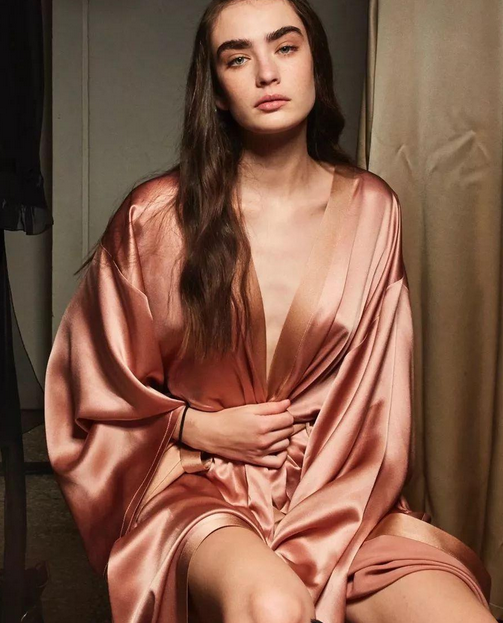
Silk fabrics can be divided into fourteen major categories and 43 subcategories according to the performance and organizational structure of the silk surface. There are roughly electric spinning, taffeta, crepe de chine, heavy crepe, smooth crepe, georgette, korgan yarn, double johnson, heavy johnson, brocade, sangbo satin, plain crepe satin, stretch plain crepe satin, and warp knitting. Wait for several categories.
Plain crepe satin
Plain crepe satin is a conventional fabric among silk fabrics. The bright satin surface is very noble, has a smooth feel and a dense structure. This is what many people think of. silk fabric, the material used to make cheongsam is as smooth and lustrous as pearls, with bright colors!
This kind of fabric feels good in your hands, so we sell plain crepe and satin clothes and Buyers’ satisfaction with bedding is usually very high; however, this kind of fabric is easy to wrinkle, so after ironing it and making it smooth, it can perfectly show its luster and make it appear noble. Plain crepe satin is suitable for dresses, scarves, shirts, four-piece suits, etc.
Stretch plain crepe satin
Similar to plain crepe satin is stretch satin. Compared with plain crepe satin, it has a certain degree of elasticity, is not easy to wrinkle, and is easy to care for, making up for the shortcomings of pure silk. Suitable for making scarves, cheongsam, etc. Elastic crepe satin: It is composed of 90%-95% mulberry silk and 5%-10% spandex. It is an interwoven fabric.
It is characterized by good elasticity, comfort, relatively small shrinkage and unique style. This is not 100% silk, other ingredients are added, the fabric is elastic and the drape is quite good. It depends on how much silk is involved. The greater the proportion of silk, the more satin-like the feel will be, and the more beautiful the luster will be.
Crepe de Chine
Using mulberry silk as raw material, the fabric structure is plain weave. This fabric is also called crepe de chine. After refining and finishing, the surface of the fabric becomes wrinkled, with slightly concave and convex and wavy scale wrinkles. It has a soft luster, soft hand feel, comfortable wearing, good breathability and good anti-wrinkle performance.
Crepe de chine is an important variety in my country’s silk production and export, accounting for more than 15% and 10% of China’s total silk production and exports. Due to its many features and wide range of uses, crepe de chine is very popular and continues to sell well.
Power spinning
Power spinning is a mulberry silk raw silk fabric, woven with a plain weave. It is named after the use of factory silk and electric silk looms instead of earthen silk and wooden machine weaving. Such as: Hangzhou Fang (produced in Hangzhou). Shaofang (produced in Shaoxing), Hufang (produced in Huzhou), etc. The texture of electric textile is tight and clean, soft to the touch, soft in luster, and smooth and comfortable to wear.
The heavy ones are mainly used as summer shirts, skirt fabrics and children’s clothing fabrics; the medium ones can be used as clothing linings; the light ones can be used as petticoats, headscarves, etc. It is a high-grade fabric. Thin electric spinning can be used as the lining of wool, cashmere coats, silk dresses, etc., and slightly thicker ones can be used as shirts, dresses, etc.
Taffeta
Taffeta: a silk-like fabric woven from cooked silk. It has good gloss, is delicate and crisp, and feels like umbrella cloth. It is particularly easy to wrinkle and form permanent creases, so it is not suitable for folding and heavy pressing. It is often packaged in rolls. There are three types of taffeta: plain taffeta, striped taffeta and flowered taffeta. They are all traditional varieties of my country that are world-famous and are also specialty varieties of Suzhou and Hangzhou in my country.
Suitable for umbrellas, skirts, and shirts. It was really stiff before entering the water, but it was horrible after entering the water. Not suitable for beginner silk lovers, it is not an ordinary trouble to take care of. The production process of taffeta is complicated, the output is not large, and the supply can only be limited, which makes it even more precious and rare.
Heavy crepe
Heavy crepe, generally speaking, refers to silk fabric with a high millimeter count. A kind of thick silk with multiple warp and weft threads combined and reinforced weft twist. The style is similar to crepe de chine, but it is much richer than crepe de chine. It is at least 4 times thicker than the common 02 crepe de chine. In fact, it is a thickened crepe de chine, which is relatively thick and suitable for making various summer close-fitting clothes with a certain shape and good drape.
Chong, pronounced as “chong” here, means repetition and overlapping. Technically, it is weaving after combining multiple twisted yarns. The main characteristics of silk crepe are: fine and uniform wrinkles on the surface, soft and smooth texture, bright and soft color, elasticity, comfortable and cool to wear, good air permeability, and the silk body is heavier than georgette. The shrinkage rate is relatively large, around 10%.
Shun crepe
“Silk Shun crepe”, main application ingredients: 2/20/22D mulberry silk 100%. It has been deeply processed through threading, strong twisting, pre-shrinking, and environmentally friendly dyeing. With its good creping effect, good breathability, beautiful appearance and softness of the cloth, it has grabbed the hot spot in the market. Silk crepe wrinkles greatly after washing, but most of them can be restored after steam ironing and smoothing. There are many colors on the market now, and some varieties are printed. Suitable for making beautiful women’s shirts and casual suits.��, otherwise it is silk fabric. Listen for the grinding sound. Because the surface of silk is protected by sericin and is resistant to friction, dry silk fabrics will make a sound when they rub against each other, so they are called “Si Ming” or “Silk Ming”, while other chemical fiber products make no sound.
The best way to determine authenticity is to burn it, not to draw it into silk. It is best to burn a small piece, because in silk blending, one warp and one weft may not necessarily be 100% silk. Silk is flame retardant and will not cause open flames or smell. After burning, twist it with your hands and it will turn into powder. You can use 84 disinfectant to test. Silk will dissolve, but 84 will not work for silk and wool blends.