
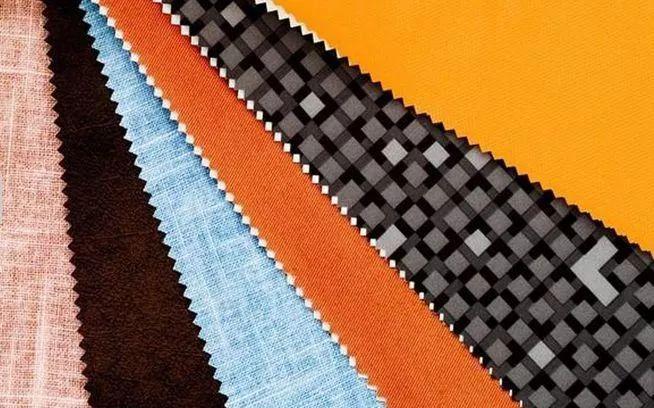
Clothing is composed of three elements: style, color and material. Material is the most basic element. Clothing materials refer to all materials that make up clothing, which can be divided into clothing fabrics and clothing accessories. Here, I mainly introduce to you some knowledge about clothing fabrics.
The concept of clothing fabric: refers to the material that embodies the main characteristics of clothing.
Commonly used clothing fabrics
Cotton fabric: refers to cotton yarn or cotton Fabric woven with cotton-type chemical fiber blended yarn. It has good breathability, good moisture absorption, and is comfortable to wear. It is a popular fabric with strong practicality. It can be divided into two categories: pure cotton products and cotton blends.
Line fabrics: Pure linen fabrics woven from hemp fibers and fabrics blended or interwoven with hemp and other fibers are collectively called linen fabrics. The common characteristics of linen fabrics are hard and tough texture, rough and stiff, cool and comfortable, and good hygroscopicity. They are ideal summer clothing fabrics. Linen fabrics can be divided into two categories: pure spinning and blended spinning.
Silk fabric: It is a high-end variety of textiles. Mainly refers to fabrics made of mulberry silk, tussah silk, rayon, and synthetic fiber filaments as the main raw materials. It has the advantages of being thin, light, soft, smooth, elegant, gorgeous and comfortable.
Wool fabric: It is a fabric made of wool, rabbit hair, camel hair, and wool-type chemical fiber as the main raw materials. Generally, wool is used as the base. It is a high-end clothing fabric that can be used all year round. It has the advantages of good elasticity, anti-wrinkle, crispness, wear resistance, strong warmth retention, comfortable and beautiful, and pure color. It is very popular among consumers.
Pure fiber fabric: Chemical fiber fabric is loved by people for its fastness, good elasticity, crispness, wear resistance and washability, and easy storage and collection. Pure fiber fabric is a fabric woven from pure chemical fiber. Its properties are determined by the properties of the chemical fiber itself. Chemical fibers can be processed into certain lengths according to different needs, and woven into silk-like, cotton-like, linen-like, elastic wool-like, mid-length wool-like and other fabrics according to different processes.
Other clothing fabrics
1. Knitted clothing fabrics: made of one or Several yarns are continuously bent into loops along the weft or warp direction and intertwined with each other.
2. Fur: pelliccia in English, leather with fur, generally used for winter cold-proof boots, shoes, or shoe lining decoration.
3. Leather: various animal skins that have been tanned. The purpose of tanning is to prevent the skin from deteriorating. The skin of some small livestock, reptiles, fish and birds is called (Skin) in English, but in Italy or some other countries it is often expressed by “Pelle” and its synonyms. This type of leather.
4. New fabrics and special fabrics: batik, tie-dye, space cotton, etc.
Identification of commonly used clothing fabrics
1) Sensory method
1. Pure cotton cloth: The cloth surface has a soft luster, soft hand feel, poor elasticity, and is easy to wrinkle. If you pinch the fabric tightly with your hands and then release it, you will see obvious wrinkles, and the folds are not easy to return to their original shape. Pull out a few warp and weft yarns from the edge of the cloth and twist them to see if the fibers are of different lengths.
2. Viscose cotton cloth (including artificial cotton, rich fiber cloth): the cloth surface has a soft and bright luster, bright colors, smooth and smooth, soft hand feel, and poor elasticity . If you pinch the fabric tightly with your hands and then release it, you will see obvious creases, and the creases are not easy to return to their original shape.
3. Polyester-cotton cloth: The luster is brighter than pure cotton cloth, the cloth surface is smooth, clean and free of yarn ends or impurities. It feels smooth and crisp, and has better elasticity than pure cotton. If you pinch the fabric tightly with your hands and release it, the creases will not be obvious and it can easily return to its original shape.
4. Pure wool worsted woolen fabric: The surface of the fabric is smooth and clean, and the texture is fine and clear. The luster is soft and natural, and the color is pure. It feels soft and elastic. Pinch the dough tightly with your hands and loosen it. The crease will not be obvious and it can quickly return to its original shape. Most of the yarn count is double ply.
5. Pure woolen woolen wool: The surface is plump and the texture is tight and thick. There is fine velvet on the surface, and the texture is generally not visible. It feels warm, plump and elastic. The yarns are mostly thick single yarns.
6. Wool-polyester blended woolen fabric: looks like pure wool fabric. The texture of the woolen fabric is clear, flat and smooth, and its hand feel is not as soft as that of pure wool fabrics. It has a stiff and rough feel, and its elasticity exceeds that of whole wool and wool viscose woolen fabrics. Squeeze the fabric with your hands and release it, and the creases will quickly return to their original shape.
7. Wool and fine blended woolen fabrics: mostly worsted. It has strong wool feel, wool style and warmth. Not as elastic as wool and polyester.
8. Wool and brocade blended wool: The surface is smooth, the wool feels strong, the appearance is waxy and shiny, and the hand feels stiff. If you pinch the material tightly with your hands and then loosen it, there will be obvious creases and it will slowly return to its original shape.
9. Real silk: The silk surface is smooth and fine, with soft luster and bright and pure colors. It feels smooth, soft and looks light and elegant. When dry, the silk surface feels like a pull when touched, and there is a “silky sound” when it is torn.
10. Viscose silk fabric (rayon): The silk surface has bright luster but not softness, bright colors, smooth hand feel, softness and strong drape. But not as light and elegant as silk. If the silk surface is loosened after being pinched by hand, there will be creases and the recovery will be slow. The sound was hoarse as it tore. After the warp and weft yarns are wetted with water, they are easy to pull.�The cloth surface has good gloss. Satin fabrics use various satin weaves. The warp or weft yarns have long floating threads covering the surface of the fabric. They are smooth and shiny along the direction of the floating threads. The texture of cotton sateen is soft, delicate and elastic. The pattern is more three-dimensional than cotton twill fabric. Other tissue fabrics
Honeycomb fabric – the warp and weft yarns have longer floating lengths, showing a three-dimensional effect of diamond-shaped geometric figures on the cloth surface. The texture is soft, good water absorption, rich and soft, and easy to snag when wearing.
Corduroy is a weft-raised cotton fabric, which is interwoven with one set of warp yarns and two sets of weft yarns. The ground weft and warp yarns are interwoven to form a consolidated plush. , the wool weft and warp yarns are intertwined and cut, and then the pile covers the cloth surface, and is sorted to form velvet strips of various thicknesses.
Wick strips are composed of plain or twill weave and plain weave changes in a certain way, so that the appearance of the fabric has warp, weft or Oblique convex strip effect, the surface of the convex strips shows a plain or twill texture, and there are thin grooves between the convex strips.
Flannel cloth – Cotton gray cloth has been brushed to form a layer of fluffy velvet fabric on the surface of the fabric. This kind of flannelette increases air and enhances warmth retention due to the presence of fluff. Therefore, flannel is often used as underwear or baby clothing, making people feel soft, thick and comfortable. Velvet cloth can be divided into single-sided velvet and double-sided velvet. knitted cotton fabric
The main difference between woven fabrics and knitted fabrics is that woven fabrics are made of two sets of warp and weft yarns interwoven vertically, while knitted fabrics are a set of yarns that are formed into loops by knitting needles and other knitting machines. They are formed by stringing together each other, similar to how we tie a sweater.
Performance characteristics
Soft feel – greater extensibility and elasticity Good breathability and wrinkle resistance, easy to fall apart, curl, and snag, not as strong and durable as woven fabrics
Commonly used varieties
Plain weave – continuous unit coils are strung together in one direction. It has detachment and severe hemming, and is prone to weft skew.
Rib – has greater elasticity and extensibility in the transverse direction. Not easy to fall apart, no curling, and good dimensional stability. French rib is a double-sided rib with small lateral elastic extensibility and poor dimensional stability.
Knitted jacquard – changing yarn thickness, quantity, color, etc. to form fabric pattern.
Chemical fiber fabric – man-made fiber fabric
Man-made fiber fabrics basically refer to viscose filament and short fiber fabrics, which are commonly known as rayon, rayon fabrics and viscose blended fabrics. Features: The moisture absorption performance is the best among chemical fibers, and its wearing comfort and dyeability are better than those of synthetic fiber fabrics, but its shrinkage rate is larger;
Soft to the touch, bright in color, breathable and comfortable; good drape, poor stiffness, resilience and wrinkle resistance, poor shape retention and prone to wrinkles; good acid and alkali resistance and light resistance.
Polyester fabric – has high strength and elastic recovery capabilities. Durable, no ironing required, easy to wash and quick to dry. However, it has poor hygroscopicity, feels stuffy when worn, and easily generates static electricity and attracts dust and stains. It has good acid, alkali and light resistance, and is not afraid of mold and insects.
Acrylic fabric – also known as synthetic wool, its elasticity and fluffiness can be compared with natural wool, and its color is bright. It is not only wrinkle-resistant, but also has good warmth retention, about 15% higher than similar wool fabrics. It has light resistance and heat resistance, is light in weight, but has poor hygroscopicity and feels stuffy when worn.
Spandex elastic fabric – Spandex is a polyurethane fiber, also known as elastic fiber because of its excellent elasticity. Generally, products do not use 100% polyurethane, and usually mix 5%–30% in the fabric. The appearance, moisture absorption and air permeability are close to similar products of natural fibers such as cotton, wool, silk and linen, making it suitable for tights.
[Fiber Identification]
The combustion method is a simple and commonly used method to identify fibers. one. It uses the different burning characteristics of various fibers to identify fiber types. But it only applies to pure textiles and interwoven products. It is not applicable to new blended products, core-spun yarn products and products with fireproof finishing. Cotton: burns quickly in flames and emits gray-white smoke;
Ma: burns quickly in the flame, emitting white smoke; Mao: burns gradually, has a hairy smell, and has crispy black ash after burning; Polyester: melts first and then burns, and has a glassy dark brown hard ball after burning;
Viscose: Low strength and hardens after being put into water.
[Fading comparison]
Cotton>Blended>Chemical fiber; easy to deform: knitted > Woven; raising and pilling: cotton fabric < blended fabric (polyester-cotton) cotton; shrinkage: cotton > blended > chemical fiber; anti-wrinkle: cotton < blended < chemical fiber.