
Characteristics of polyester
As we all know, polyester fabrics have high strength, good elasticity, heat resistance, insulation, and wear resistance. , It has the characteristics of relatively excellent corrosion resistance, and polyester dries easily without deformation after washing, and has good washability and wearability.
But at the same time, polyester fabrics have poor dyeability and hygroscopicity. They are also easily charged with static electricity and contaminated with dust, affecting their appearance and comfort.
There are many types of polyester fiber fabrics on the market. In addition to pure polyester products, there are also many products blended or interwoven with various textile fibers, which make up for the shortcomings of pure polyester fabrics. , exerting better taking performance. Polyester fabrics are developing in the direction of natural synthetic fibers such as wool-like, silk-like, linen-like, and suede-like.
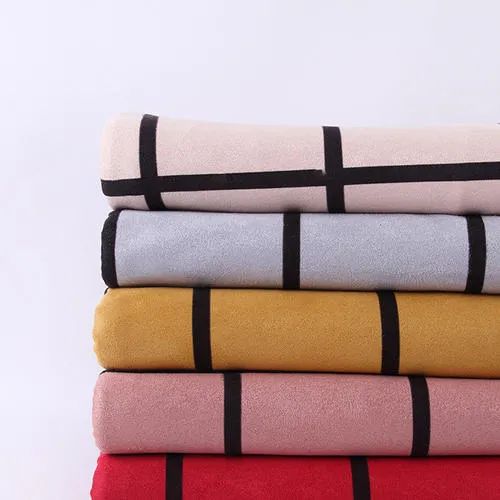
Today I will introduce to you the advantages of several polyester blended products:
Advantages of polyester-cotton blends
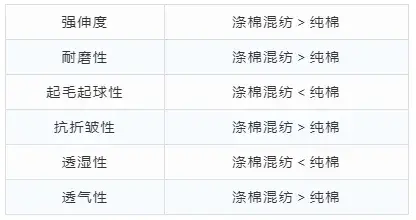
The contrast between polyester-cotton blended fabric and pure cotton fabric is as follows:
Polyester-cotton blended fabrics are generally divided into two types:
Polyester-cotton (TC) fabric: refers to The composition of polyester accounts for more than 50%, and the composition of cotton is less than 50%.
Advantages: The luster is brighter than pure cotton, it feels smooth and crisp, and it is not easy to wrinkle. The higher the polyester content, the less likely the fabric is to wrinkle.
Cotton-polyester (CVC) fabric: refers to the content of cotton above 50% and the content of polyester below 50%.
Advantages: The luster is slightly brighter than pure cotton cloth, the cloth surface is smooth, clean and free of yarn ends or impurities. It feels smooth and crisp, and is more wrinkle-resistant than pure cotton.
The common disadvantages of this type of blended fabrics are that they are not as skin-friendly as cotton and are not as comfortable to wear as cotton fabrics.
Advantages of polyester and linen blends
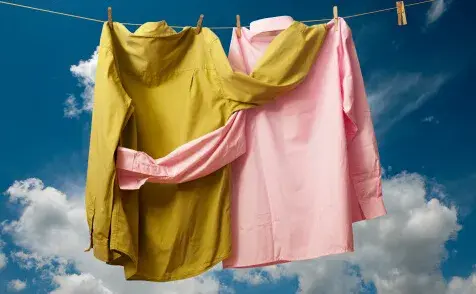
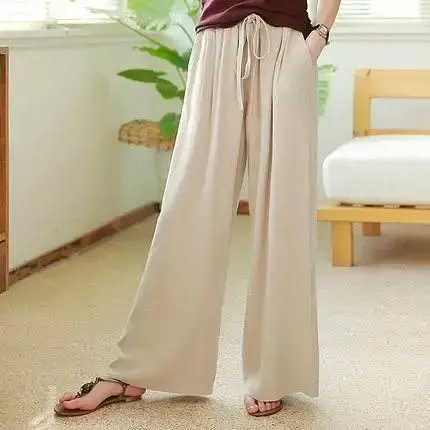
In the past, linen textiles had high yarn density and could only be used to weave medium and low-end products, and were only suitable for outerwear and decorative fabrics. etc., which cannot reflect the unique advantages of linen textiles such as good moisture absorption, good moisture release, and coolness. Nowadays, polyester fiber and flax fiber are blended to produce a series of high-end linen blended products suitable for summer inner and outer clothing. What are the characteristics of polyester and linen blended fabrics?
01. Cool to the touch
The flax fiber blending ratio is 35%-40%, and the fiber surface coverage is high. After contact with human skin, the heat on the surface of the human body will be quickly dissipated, making people feel cool.
02. The fabric is light and thin, and the dyeing is bright
The yarn is relatively fine, generally below 20tex (more than 50 tex), and can be used alone or Pure or blended yarns with other textile fibers are interwoven into ultra-thin fabrics. The dyeing and printing of the products are bright, beautiful and gorgeous.
03. Good wrinkle resistance
Due to fiber characteristics, polyester can be used to improve the wrinkle resistance of linen fiber fabrics. , The disadvantage of not brightly dyed.
04. Comfortable to wear and good washability
Use the advantages of good moisture absorption and moisture permeability of flax fiber to improve the poor moisture absorption and wearability of polyester fabrics. Disadvantages of discomfort.
Advantages of polyester-wool blending
Wool:polyester=45:55 This ratio can not only maintain the advantages of wool, but also give full play to the strengths of polyester. Almost all coarse and worsted wool fabrics have corresponding wool-polyester blended varieties. Among them, worsted wool-polyester thin tweed, also known as cool tweed, is commonly known as Mao Qianliang (Note: Qianliang is the common name for polyester). It is one of the fabrics that best reflects the characteristics of wool-polyester blends.
Compared with all-wool tweed, wool-polyester thin tweed has a light texture, good wrinkle recovery, strong wear resistance, easy to wash and quick-dry, long-lasting pleats, stable size, and not easy to be eaten by insects, but its feel is not as good as that of full-wool tweed. The hair is soft. If glossy polyester is used as the raw material for blending, the surface will have a silky luster. If cashmere or camel hair and other animal hairs are used in the blended raw material, the hand feel will be smoother.