
1. What is long-staple cotton?

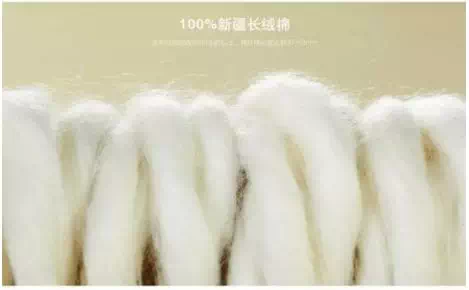

Long-staple cotton, also called sea-island cotton, refers to various varieties of sea-island cotton and Sea-land hybrid cotton has long fiber, thin and soft color, milky white or light yellow color, rich mercerization and excellent quality. It is the raw material for producing cotton yarn below 10tex. The countries currently producing long-staple cotton mainly include Egypt, Sudan, the United States, Morocco, and Central Asian countries. The main production bases of long-staple cotton in my country are in Xinjiang and other regions. Long-staple cotton can be divided into extra-long-staple cotton and medium-long-staple cotton.
The main feature of long-staple cotton is that the length of the cotton fiber is longer. Generally speaking, the longer the length, the better the strength of the yarn spun, and the indicators such as evenness, hairiness, and neps are also better than those of short fibers. . Egyptian long-staple cotton is the most famous in the world. Its fiber length can reach more than 35 mm. Its fiber cross-section is nearly circular and has strong diffusion ability. Its fabrics have good mercerization and good dyeing effect. In my country, Xinjiang long-staple cotton is the best. Its softness, gloss, skin-friendliness, air permeability, elasticity, etc. are far superior to ordinary cotton.
2. Main varieties of long-staple cotton
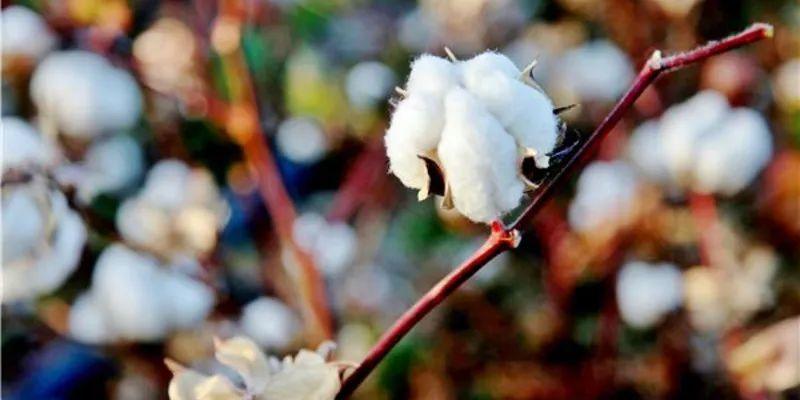
1 Egyptian long-staple cotton: Egyptian long-staple cotton is known as the “white gold” of cotton. Egyptian cotton is native to the South Asian subcontinent. It likes high temperatures and rainy weather, and is most suitable for its growth in savannah, temperate and tropical monsoon areas. Egypt is the world’s most important exporter of long-staple cotton. Because of its intrinsic quality, Egyptian long-staple cotton is also the most expensive in the world.
2 American Pima cotton: Pima cotton is the collective name for extra long-staple cotton (ELS). It is named after the tradition of planting and hand-picking cotton by the Pima Indians in the southwestern United States. After dyeing and finishing, Pima cotton has a brighter and brighter color; its texture is naturally soft, smooth to the touch, and has a strong drape feeling. The woven fabric is full of toughness and the finished product has a better drape effect.
3 Xinjiang long-staple cotton: Xinjiang long-staple cotton is produced in Aksu, Bayingoleng, Kashgar and other places in the Turpan Basin and Tarim Basin of Xinjiang. It is the first long-staple cotton producing area in my country. Xinjiang’s long-staple cotton is of excellent quality, and all quality indicators exceed national standards. The ones produced in Turpan are particularly good because their fibers are soft and long, white and shiny, and have good elasticity.
E N D